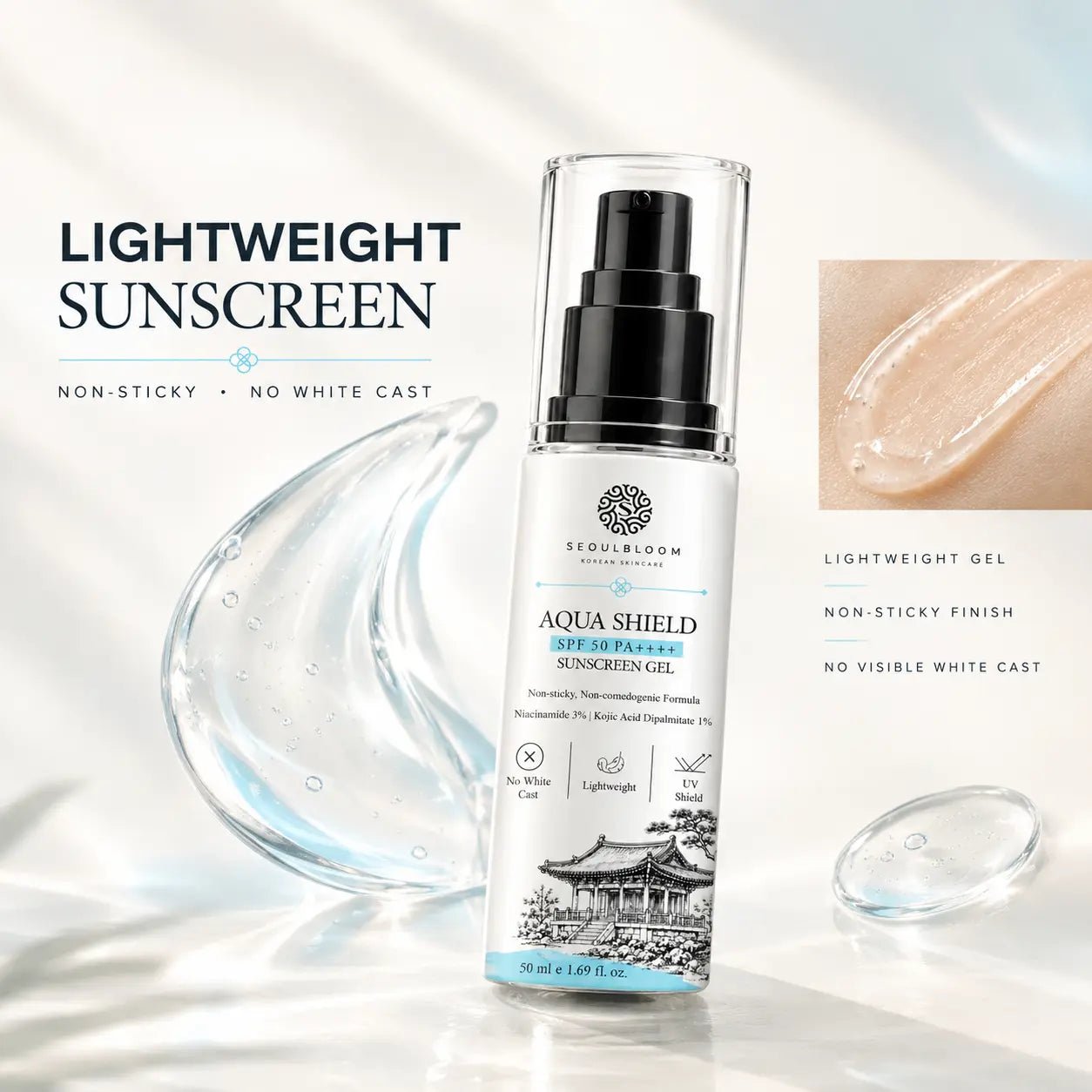
Quick answer: choose sunscreen by skin type — gel for oily and acne-prone skin, gel or cream-gel for combination skin, cream for dry skin, and fragrance-free formulas for sensitive skin. Always pick broad-spectrum SPF 30–50 with PA+++ or PA++++.
Choosing sunscreen by skin type is the easiest way to find a formula you will wear every day. Your skin type decides which texture feels comfortable, which ingredients help and which ones to avoid. This hub explains each skin type in detail and links to deeper guides. Whatever your skin type, follow the American Academy of Dermatology baseline: broad spectrum, SPF 30 or higher.
Sunscreen by skin type at a glance
| Skin type | Best texture | Look for | Avoid |
|---|---|---|---|
| Oily | Gel / water gel | Non-comedogenic, matte finish, niacinamide | Heavy oils, thick creams |
| Combination | Gel or cream-gel | Balanced finish, light hydration | Very rich creams on T-zone |
| Normal | Any you enjoy | Broad spectrum SPF 30–50 | — |
| Dry | Cream or cream-gel | Glycerin, hyaluronic acid, ceramides | High alcohol, very matte formulas |
| Sensitive | Gentle gel or mineral | Fragrance-free, short ingredient list | Strong fragrance, high alcohol |
| Acne-prone | Light gel | Oil-free, non-comedogenic | Occlusive oils, heavy butters |
How to identify your skin type
Wash your face with a gentle cleanser and wait one hour without applying anything. Then check how your skin feels:
- Shiny all over: oily skin.
- Shiny T-zone, normal or dry cheeks: combination skin.
- Tight, rough or flaky: dry skin.
- Comfortable, neither oily nor tight: normal skin.
- Stings, itches or reddens easily: sensitive skin (this can overlap with any type).
Sunscreen for oily skin
Oily skin produces more sebum, so heavy sunscreens quickly feel greasy and can clog pores. A lightweight gel sunscreen is usually the best choice. It is water-based, absorbs quickly and leaves a matte or natural finish.
- Look for “non-comedogenic”, “oil-free” and “matte” on the label.
- Niacinamide helps balance the look of oil and supports the skin barrier.
- In humid weather, blot with a tissue before reapplying.
- Avoid thick creams with heavy oils or butters.
Read more in our sunscreen for oily skin guides and the gel sunscreen guide.
Sunscreen for combination skin
Combination skin is oily in the T-zone and normal or dry on the cheeks. A gel or cream-gel sunscreen keeps the T-zone comfortable without drying the cheeks. If your cheeks feel tight by afternoon, apply a light moisturiser underneath only on those areas.
Sunscreen for dry skin
Dry skin lacks oil and often loses water quickly. Therefore, it needs a sunscreen that also hydrates. Choose a cream or cream-gel with humectants such as glycerin and hyaluronic acid, plus barrier-supporting ceramides. Alternatively, wear a gel sunscreen over a rich moisturiser.
- Apply moisturiser first and let it settle for two to three minutes.
- Avoid very matte, high-alcohol formulas.
- Dry North Indian winters and AC offices make hydration even more important.
More options in sunscreen for dry skin.
Sunscreen for sensitive skin
Sensitive skin reacts easily with stinging, redness or itching. Fragrance and high alcohol content are common triggers. Mineral filters (zinc oxide, titanium dioxide) are often well tolerated, though they can leave a white cast on deeper Indian skin tones.
- Patch-test any new sunscreen on the jawline for three days.
- Choose fragrance-free formulas with short ingredient lists.
- Stop using a product that stings and see a dermatologist if irritation continues.
Sunscreen for acne-prone skin
Acne-prone skin needs sun protection that will not clog pores. Choose oil-free, fragrance-free, non-comedogenic gels. Daily sunscreen also matters for post-acne marks, because UV exposure can darken them and slow fading. See our acne-prone and sensitive skin section.
Sunscreen for normal skin
Normal skin tolerates most textures, so simply choose the finish you enjoy. A light gel or cream-gel works well in most Indian weather. Focus on the basics: broad spectrum, SPF 30–50 and PA+++ or higher.
Sunscreen for men
Men often prefer fast, non-greasy gels or fluids that do not sit in beard hair. Apply after shaving once the skin has calmed. Outdoor workers and bikers should choose SPF 50 PA++++ and reapply during the day. Read more in men’s sunscreen.
Sunscreen for mature skin
UVA is a major driver of wrinkles and age spots. So mature skin benefits from high PA protection and a hydrating texture. Pair sunscreen with a moisturiser, and consider tinted formulas with iron oxides if you have pigmentation.
Sunscreen by skin type FAQ
Which sunscreen is best for oily skin?
A lightweight, non-comedogenic gel or water-gel sunscreen with SPF 30–50 is usually best for oily skin, because it adds little oil and absorbs fast.
Which sunscreen is best for dry skin?
Dry skin usually does best with a cream or cream-gel containing glycerin, hyaluronic acid or ceramides, or a gel layered over moisturiser.
Which sunscreen is best for combination skin?
A gel or cream-gel suits combination skin. Add a light moisturiser only on drier cheeks if needed.
Which sunscreen is best for sensitive skin?
Choose fragrance-free, low-alcohol formulas and patch-test first. Many sensitive-skin users tolerate mineral filters such as zinc oxide well.
Can sunscreen cause acne?
Heavy, oily formulas can clog pores in acne-prone skin. Non-comedogenic, oil-free gels are much less likely to cause breakouts.
Should men use a different sunscreen?
Not necessarily. Men often prefer fast, non-greasy gels or fluids that do not sit in beard hair, but the SPF and PA rules are the same.