Quick answer: A gel sunscreen is a water-based, oil-light sunscreen that absorbs fast and feels weightless. It protects as well as a cream with the same SPF and PA rating, as long as you apply enough. Gels suit oily, combination and acne-prone skin and humid Indian weather best.
Key takeaways
- Texture changes the feel, not the protection: SPF, PA and the amount you apply decide that.
- Pick SPF 30 or higher (SPF 50 for strong Indian sun) with PA+++ or PA++++.
- Gel sunscreen suits oily, combination and acne-prone skin; dry skin needs a moisturiser underneath.
- Use two finger-lengths for face and neck, and reapply about every two hours outdoors.
- Choose non-comedogenic, low-alcohol formulas if your skin is sensitive or breakout-prone.
A gel sunscreen is often the easiest way to make daily SPF stick in India. If creams have ever felt greasy, sticky or chalky on you, a gel may be what you were missing. After all, heat, humidity and sweat make heavy textures hard to wear.
However, “gel” is a texture, not a promise. Some gels protect brilliantly, while others are under-rated, alcohol-heavy or simply wrong for your skin. This guide explains how gels work, how they compare with creams, and exactly what to check before you buy one.
In this article
- What is a gel sunscreen?
- How does gel sunscreen work on the skin?
- Does gel sunscreen protect as well as cream?
- SPF and PA on a gel sunscreen label
- Benefits of gel sunscreen
- Downsides of gel sunscreen: who should skip it?
- Gel sunscreen vs cream and other textures
- Which skin types suit a gel sunscreen?
- Gel sunscreen for Indian weather, season by season
- How to choose the best gel sunscreen
- Ingredients to look for and avoid
- How to apply gel sunscreen correctly
- Common gel sunscreen mistakes
- Gel sunscreen myths vs facts
- FAQ
What is a gel sunscreen?
A gel sunscreen is a sunscreen that uses a water-based gel to carry its UV filters. In contrast, creams and lotions use an oil-rich base. As a result, a gel spreads like a clear jelly and sinks in within seconds. It also leaves very little film on the skin.
You will see several names on Indian shelves. However, they all sit on the same spectrum:
- Water gel: the thinnest version, almost like a serum.
- Aqua gel: a watery gel, often with hydrating actives such as glycerin.
- Gel: a classic clear or translucent jelly texture.
- Cream-gel: a gel with some emollients, so it feels slightly cushiony.
So “gel” describes the base and the feel. It does not tell you how strong the protection is. For that, you still need to read the SPF and PA numbers.
How does gel sunscreen work on the skin?
Every sunscreen works through its UV filters. Gel sunscreen formulas mostly rely on organic filters, which people often call chemical filters. These filters absorb UV energy and release it as a tiny amount of heat. Because they dissolve clearly, they suit a transparent gel well.
Mineral filters work differently. Zinc oxide and titanium dioxide sit on the skin and scatter or absorb UV. However, they are harder to suspend in a clear gel, and higher amounts can look white on deeper skin. That is why most gels feel invisible. Our chemical vs mineral explainer covers both types in more depth.
Gels also contain light polymers. These help the filters form an even film once the water evaporates. In practice, that film matters as much as the filters. If you rub, sweat or wipe it away, protection drops. Therefore, reapplication stays important with every texture.
Does gel sunscreen protect as well as cream?
Yes, a gel sunscreen protects as well as a cream when both carry the same SPF and PA rating. You also need to apply the same amount. The texture changes how the product feels, not how much UV it blocks.
SPF tells you about UVB, the main cause of sunburn. According to the World Health Organization, SPF does not describe UVA protection. So you should always look for a broad-spectrum label as well. The American Cancer Society gives these approximate UVB figures:
| SPF | Approx. UVB filtered | When it fits |
|---|---|---|
| SPF 15 | ~93% | Short, incidental exposure only |
| SPF 30 | ~97% | The daily minimum dermatologists advise |
| SPF 50 | ~98% | Strong Indian sun, commutes and outdoor days |
| SPF 100 | ~99% | Rarely needed; the extra gain is small |
Still, quantity is the catch. Labs test SPF at 2 mg of product per square centimetre of skin. Gels feel light, so many people use far less than that. In that case, a gel sunscreen delivers lower real-world protection, and the same is true for a cream.
SPF and PA on a gel sunscreen label
Most Korean-inspired and Indian gel sunscreen labels show a PA grade next to the SPF. PA stands for “Protection Grade of UVA”. The grade comes from a test called Persistent Pigment Darkening, or PPD. In simple terms, PPD shows how much longer protected skin takes to darken under UVA.
| PA grade | PPD value | UVA protection |
|---|---|---|
| PA+ | 2 to 4 | Some |
| PA++ | 4 to 8 | Moderate |
| PA+++ | 8 to 16 | High |
| PA++++ | 16 or more | Extremely high |
UVA rays reach deeper into the skin and drive tanning, dark spots and early ageing. So if you deal with tanning or pigmentation, PA+++ or PA++++ matters as much as SPF 50. You can read the background in the Wikipedia overview of sunscreen and in our SPF and PA guide.
Benefits of gel sunscreen

People switch to a gel sunscreen for comfort first. However, comfort leads to better protection, because you actually wear it. Here are the main benefits:
- Light in heat and humidity. A water-based gel adds no oily layer, so it stays comfortable when you sweat.
- Less shine. Oil-light gels suit oily and combination skin, especially when the label says non-comedogenic.
- No white cast. Clear gels blend into medium and deep Indian skin tones without a grey tint.
- Quick to layer. Gels set fast and sit well under makeup, so your morning routine stays short.
- Easy to reapply. Because the texture feels light, you are more likely to top up during the day.
In short, the best sunscreen is the one you will use every morning. For many Indian readers, that means a gel.
Downsides of gel sunscreen: who should skip it?
A gel is not perfect for everyone. Before you buy, check these trade-offs:
- Very dry skin: gels hold fewer emollients, so dry skin may feel tight after a few hours. In that case, use a moisturiser first or pick a cream-gel.
- Alcohol-heavy formulas: some gels list denatured alcohol near the top for a quick-dry finish. However, it can sting sensitive or damaged skin.
- Pilling: a gel can roll into small flakes over silicone primers or wet serums. So let each layer settle first.
- Water resistance: “gel” does not mean sweat-proof. If you swim or train outdoors, look for a clear water-resistant claim.
None of these points makes a gel unsafe. Instead, they simply help you match the texture to your skin and day.
Gel sunscreen vs cream and other textures

Texture is a personal choice. Still, each type has clear strengths. This table compares the most common options side by side:
| Texture | Feel and finish | Best for | Watch out for |
|---|---|---|---|
| Gel / water gel | Weightless, fast, matte to fresh | Oily, combination and acne-prone skin; humid cities | Can feel drying; some contain alcohol |
| Cream-gel | Light but slightly cushiony | Normal skin, AC offices | May feel heavy in peak humidity |
| Cream / lotion | Richer, dewy, moisturising | Dry or mature skin; winters | Shine on oily skin |
| Fluid / serum | Runny and very sheer | Makeup wearers | Easy to under-apply |
| Stick | Solid balm | Top-ups on the go | Hard to apply enough on the full face |
Many people also switch with the season. For a fuller texture breakdown, see gel vs cream in our complete sunscreen guide.
Which skin types suit a gel sunscreen?

Your skin type decides how a gel sunscreen will feel by the afternoon. Use this quick guide.
Oily skin
Oily skin is the best match for a gel. Look for words like “matte”, “oil-control” and “non-comedogenic”. Also, niacinamide can help balance the look of oil. You will find more picks in our sunscreen for oily skin guides.
Combination skin
A gel or cream-gel keeps the T-zone calm. At the same time, it will not over-dry the cheeks. If your cheeks feel tight, add a light moisturiser underneath.
Acne-prone skin
Choose a fragrance-free, non-comedogenic gel. Then avoid heavy oils and thick occlusives. Our acne-prone and sensitive skin section goes deeper.
Sensitive skin
A gel can work well, but patch-test first. Also skip formulas with a lot of alcohol or strong fragrance. If redness appears, stop and speak to a dermatologist.
Dry skin
Use a gel only over a good moisturiser. Otherwise, choose a hydrating cream. Read sunscreen for dry skin for options.
Gel sunscreen for Indian weather, season by season

India has very different climates across the year. So the right texture can change with the weather. This table shows a simple plan:
| Season or setting | Best texture | Tip |
|---|---|---|
| Humid summer (Mumbai, Chennai, Kolkata) | Gel or water gel | Choose a matte finish and blot before you reapply |
| Monsoon | Gel | Clouds do not stop UV, so keep the daily habit |
| Dry heat (Delhi, Rajasthan summers) | Gel over moisturiser, or cream-gel | Add hydration underneath |
| North Indian winter | Cream-gel or cream | Dry air needs more emollients |
| AC office all day | Cream-gel | AC air dries skin even in summer |
Even on grey monsoon days, you still need protection. The American Academy of Dermatology notes that a large share of UV rays pass through clouds.
How to choose the best gel sunscreen
Labels can feel confusing. However, six checks cover almost everything you need:
- SPF 30 or higher. The AAD recommends at least SPF 30. For daily Indian sun, SPF 50 gives more margin.
- Broad spectrum with a high PA. Aim for PA+++ or PA++++ so UVA is covered too.
- Non-comedogenic. This matters most if you break out easily.
- The first five ingredients. If alcohol sits near the top and your skin is sensitive, pick another formula.
- Useful extras. Niacinamide supports an even-looking tone, while glycerin and hyaluronic acid add hydration.
- A finish you like. Matte, natural or dewy all work. Still, if you dislike the feel, you will not reapply it.
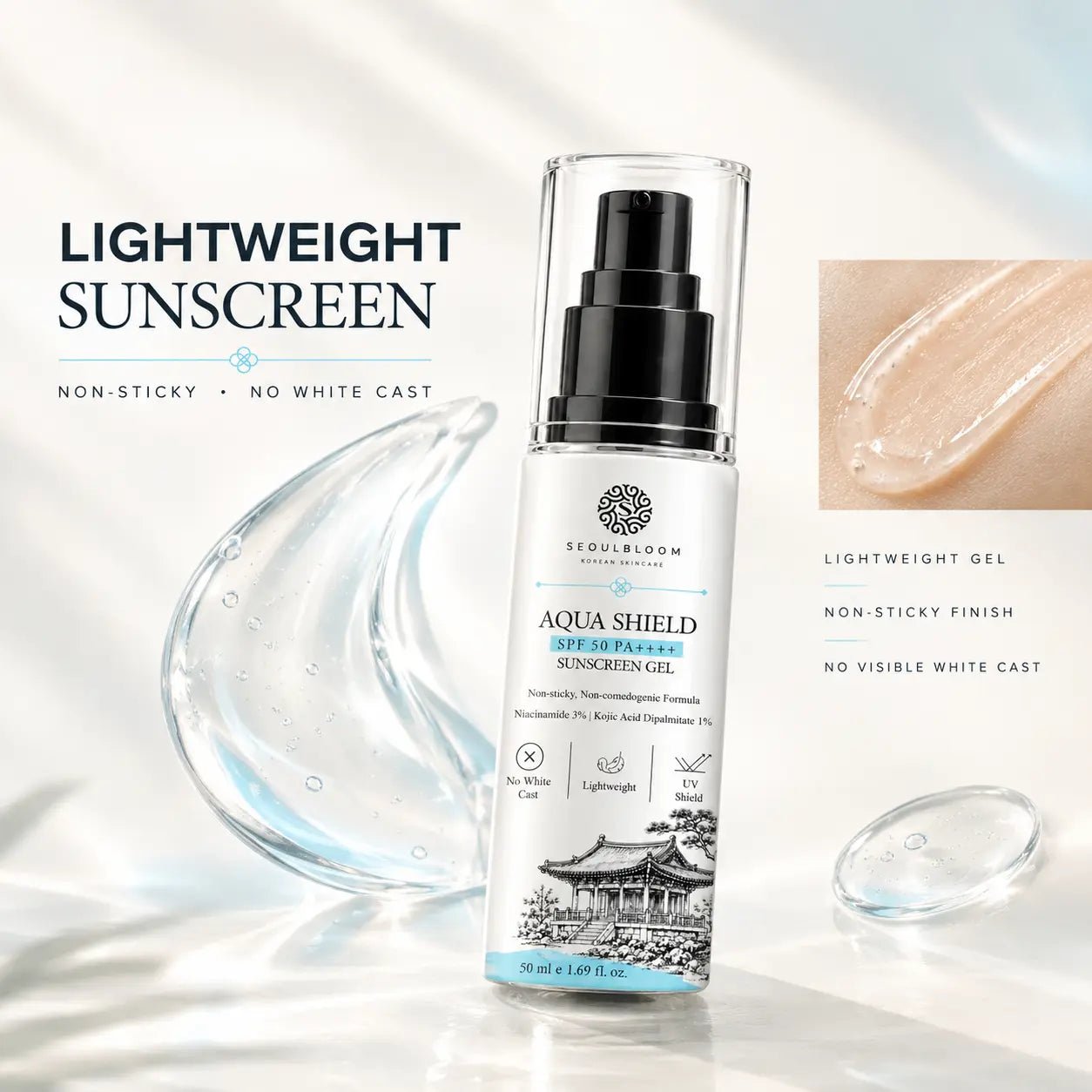
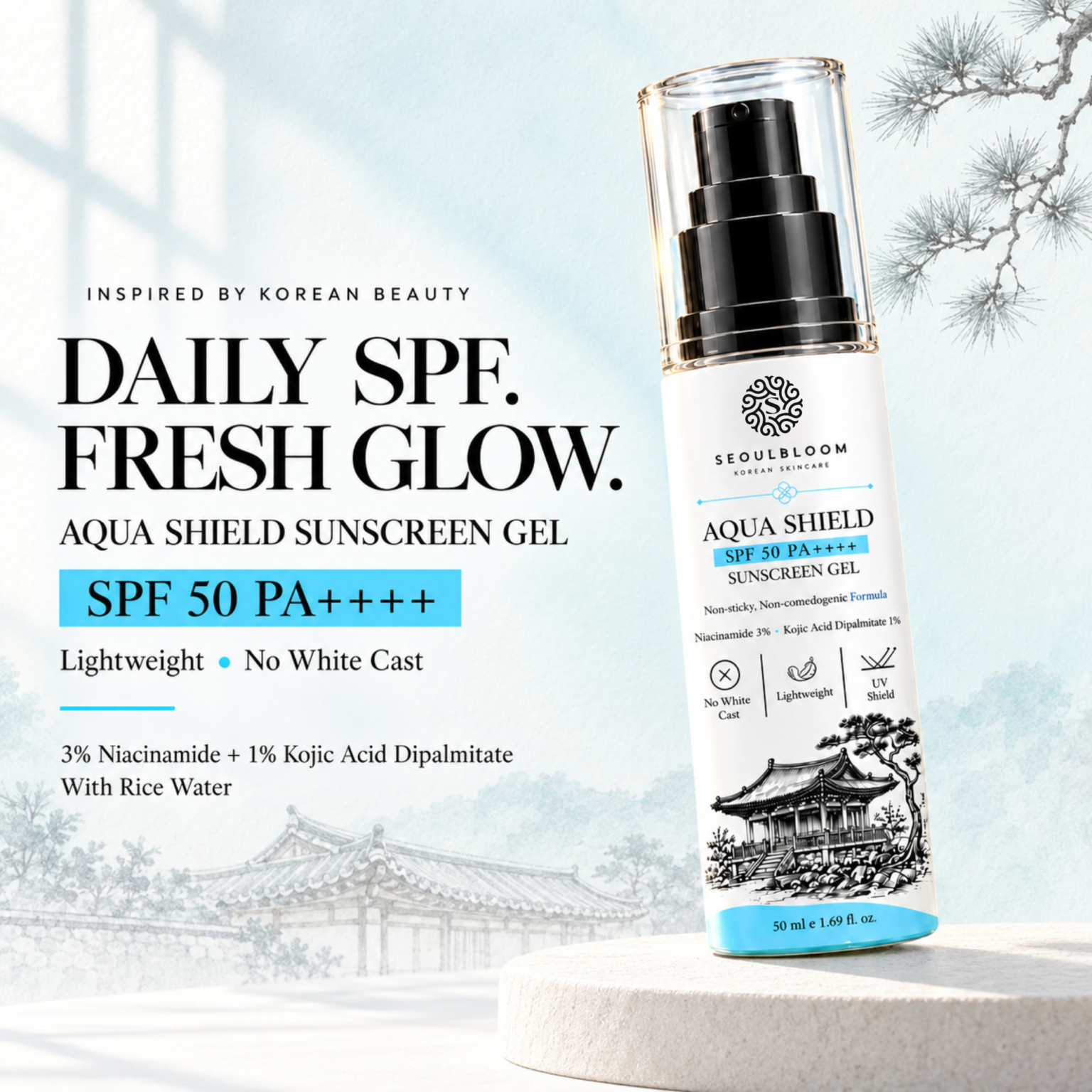
Shopping for your first gel sunscreen? Browse SeoulBloom sunscreens or start with this pick, which meets every point above:
Our pick
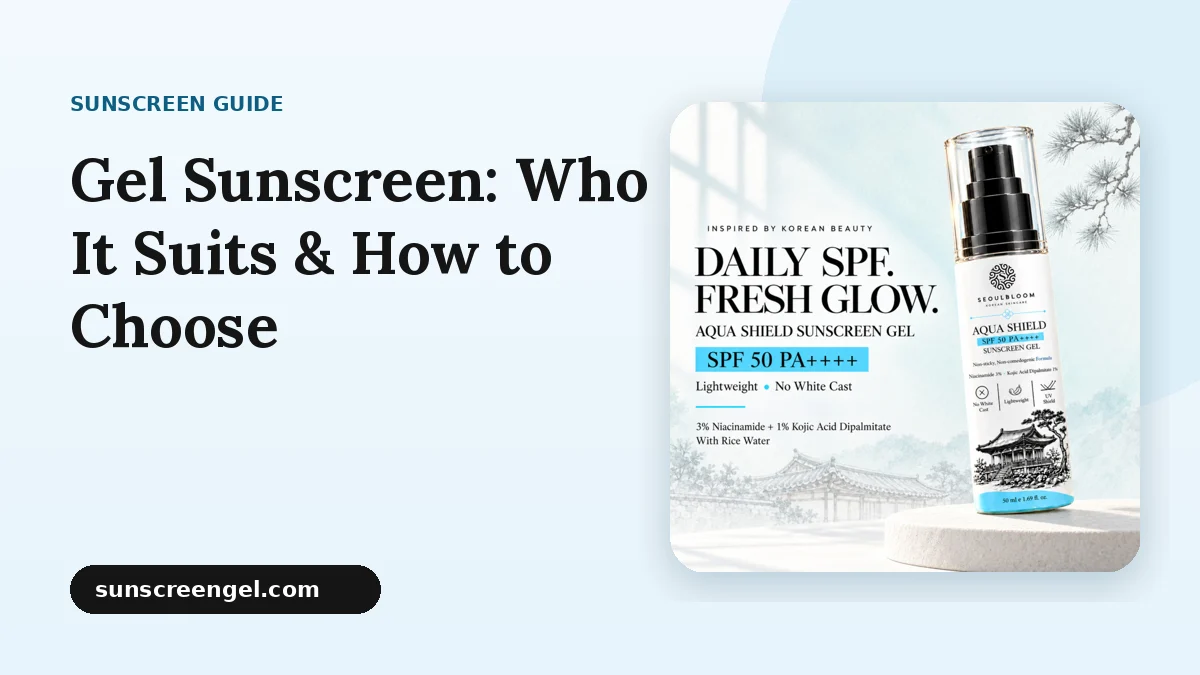
SeoulBloom Aqua Shield SPF 50 PA++++ Sunscreen Gel
- SPF 50 PA++++ broad-spectrum UVA/UVB protection
- Lightweight, non-sticky gel — no white cast
- Non-comedogenic; suits oily & combination skin
- 3% niacinamide + 1% kojic acid dipalmitate for even-looking tone
- 60 ml · ₹799
₹999
Aqua Shield pairs SPF 50 PA++++ with 3% niacinamide and 1% kojic acid dipalmitate. So it also supports a more even-looking tone, which helps if you deal with tanning or pigmentation. Its non-sticky gel leaves no white cast and sits comfortably under makeup.
Ingredients to look for and avoid
The UV filters do the protecting. However, the rest of the formula decides how your skin feels by evening. Use this table as a quick reference while you read labels:
| Ingredient | Why it helps or hurts | Best for |
|---|---|---|
| Niacinamide | Supports the skin barrier and helps balance the look of oil and uneven tone | Oily, combination, tanned skin |
| Glycerin, hyaluronic acid | Draw water into the skin, so the gel feels less drying | All skin types, especially dehydrated skin |
| Ceramides | Help hold moisture in the skin barrier | Dry and sensitive skin |
| Kojic acid dipalmitate | A tone-focused active that complements daily UV protection | Skin with dullness or visible pigmentation |
| Denatured alcohol (high up the list) | Gives a quick-dry feel, yet can sting or dry out the skin | Avoid if your skin is sensitive or dry |
| Strong fragrance | Adds scent but may irritate reactive skin | Avoid if you have sensitive skin |
In addition, check the expiry date. Sunscreen filters can lose strength over time, especially in hot cars or bathrooms. So store your tube in a cool, shaded place and replace it once it expires. If the colour, smell or texture changes, replace it sooner. Finally, remember that no single ingredient replaces the basics. You still need enough product, a high SPF and PA, and regular top-ups.
How to apply gel sunscreen correctly
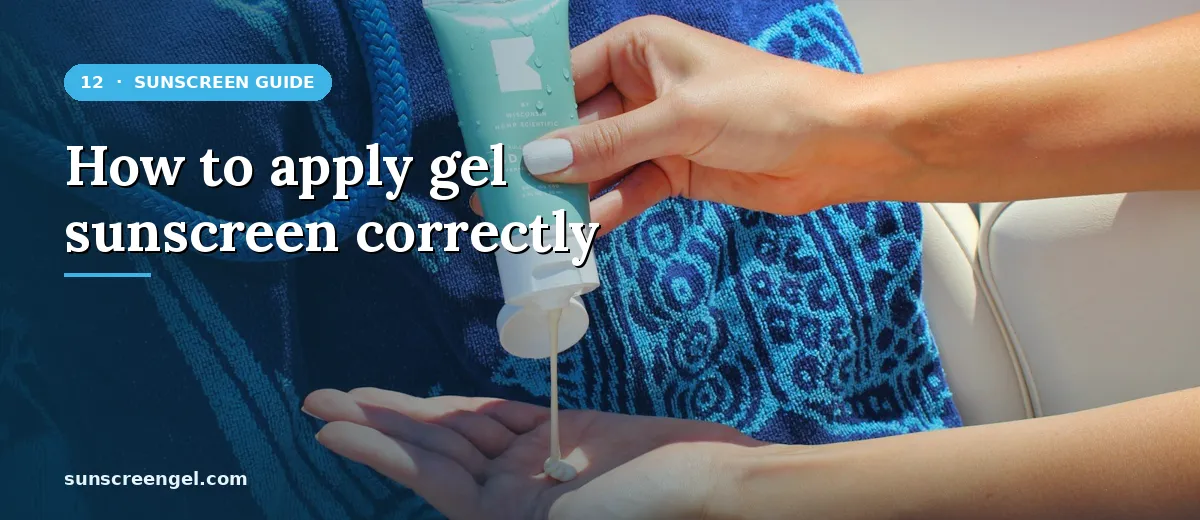
Good technique matters more than the brand. Follow these steps every morning:
- Finish your skincare first. Cleanse, then use serum and a light moisturiser. Sunscreen comes last, before makeup.
- Measure, don’t guess. Squeeze two finger-lengths of gel for the face and neck. Because gels are thin, this will feel like a lot.
- Apply in two thin layers. Spread half, wait a minute, then add the rest. This cuts pilling and missed spots.
- Cover the edges. Include ears, hairline, the sides of your neck and the backs of your hands.
- Protect your lips. Use an SPF lip balm such as UV Shield Lip Balm SPF 50.
- Wait about 15 minutes before you go out, as the AAD advises.
Reapplying gel sunscreen over makeup
Reapply about every two hours outdoors. Also reapply right after sweating, swimming or wiping your face. Over makeup, first blot excess oil with a tissue. Then pat a thin layer of gel on with your fingertips or a clean sponge. A gel sunscreen works well here, because it sets quickly and rarely disturbs foundation.
Common gel sunscreen mistakes
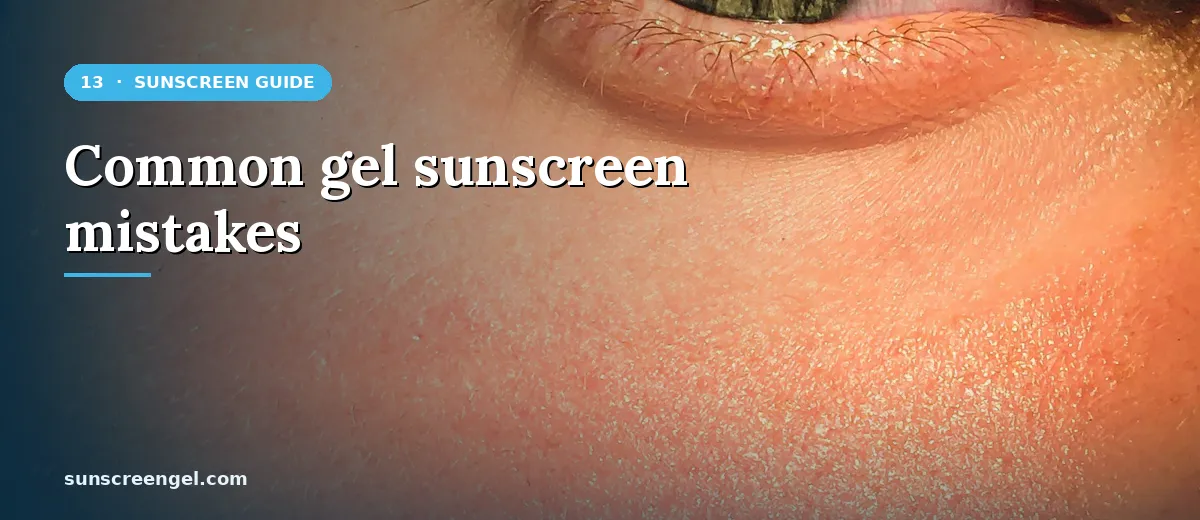
Most sunburns and tans come from small habits. Avoid these five:
- Using a pea-sized amount because the gel “feels like enough”.
- Skipping reapplication because your skin still looks matte.
- Layering the gel over a heavy, still-wet moisturiser, which causes pilling.
- Relying only on the SPF in foundation or moisturiser.
- Checking SPF but ignoring PA, and then wondering why you still tan.
Each of these mistakes lowers real protection. Fortunately, each one is easy to fix once you know it.
Gel sunscreen myths vs facts
A lot of advice online mixes facts with marketing. Here is what the evidence supports:
| Myth | Fact |
|---|---|
| Gel sunscreen is weaker than cream. | Protection depends on SPF, PA and the amount you apply, not on texture. |
| Indian skin does not need sunscreen. | Melanin helps, but UV still causes tanning, pigmentation and ageing. |
| You can skip it indoors. | Window light and short trips outside add up, so a daily habit is simpler. |
| SPF 100 lets you stay out all day. | No sunscreen allows that. Reapply and use shade, hats and sunglasses too. |
| A gel sunscreen always causes breakouts. | Many gels are non-comedogenic. In fact, they often suit acne-prone skin best. |
For the full picture on UV filters, SPF and PA, read The Complete Sunscreen Guide.
Frequently asked questions
Is gel sunscreen good for oily skin?
Yes. A gel sunscreen is usually the most comfortable choice for oily and combination skin, because its water-based texture adds little oil and absorbs quickly. Pick one labelled non-comedogenic with SPF 30 or higher.
Is gel sunscreen better than cream sunscreen?
Not automatically. With the same SPF and PA rating and the same amount applied, both protect equally. Gels suit oily skin and humid weather, while creams suit dry skin and cold, dry air.
Can I use gel sunscreen on dry skin?
Yes, but apply a moisturiser first and watch for tightness. If your skin still feels dry, a cream-gel or cream sunscreen is usually a better fit.
How much gel sunscreen should I apply on my face?
Use about two finger-lengths for the face and neck. Gels feel thin, so most people under-apply; applying in two layers makes it easier to use enough.
Does gel sunscreen leave a white cast?
Most gels do not, because they mainly use sheer organic UV filters rather than high levels of zinc oxide or titanium dioxide.
Can I wear gel sunscreen under makeup?
Yes. Let it set for a few minutes before primer or foundation, and avoid stacking many silicone-heavy products to prevent pilling.
What does PA++++ mean on a gel sunscreen?
PA++++ is the highest UVA protection grade. It means the sunscreen tested at a PPD value of 16 or more, which helps against tanning and pigmentation.
How we researched this guide: We reviewed the top-ranking Indian and global pages for “gel sunscreen” (including Nykaa, Pinkvilla, Smytten, Foxtale and Pond’s) and found that most skip SPF/PA explanations, application amounts and sources. We then checked every claim against the AAD, WHO and American Cancer Society, and wear-tested gel textures in humid Indian conditions. Read our editorial policy.
Sources & further reading
- American Academy of Dermatology – Sunscreen FAQs
- American Academy of Dermatology – Common sunscreen mistakes
- American Cancer Society – How to use sunscreen
- World Health Organization – Protecting against skin cancer
- Wikipedia – Sunscreen

Written & fact-checked by
SeoulBloom Editorial Team — the skincare research and product team behind SeoulBloom. We formulate and sell sunscreen for Indian skin, test textures in Indian heat and humidity, and check every claim against dermatology bodies (AAD, WHO) and peer-reviewed research. Updated 20 November 2026. How we write & review.
Disclosure: SunscreenGel.com is run by the team behind SeoulBloom, and we link to SeoulBloom products where they fit. This article is for general education, not medical advice — see a dermatologist for skin conditions. Read our disclaimer. Last reviewed November 2026.