Quick answer: Sunscreen for tanning reduces tan but cannot stop it completely. Choose broad-spectrum SPF 30 to 50 with PA+++ or PA++++, apply about two finger-lengths to face and neck, and reapply every two hours outdoors. Add shade, a hat and protective clothing for the best results.
Key takeaways
- A tan is a sign of UV damage to skin cells, not a healthy glow.
- UVA drives most tanning, so the PA rating matters as much as SPF.
- Pick SPF 30 to 50 with PA+++ or PA++++ for Indian sun.
- Most people still tan because they apply too little and skip reapplication.
- Tinted sunscreens with iron oxides also help against visible light in deeper skin tones.
- Sunscreen will not erase an old tan, but it lets it fade naturally.
Choosing the right sunscreen for tanning starts with one honest fact: no product stops a tan completely. Still, the right formula, used the right way, can keep your skin far more even. That matters in India, where strong sun shines for most of the year.
In this guide, we explain why Indian skin tans so fast and which UV rays cause it. Then we cover how to read SPF and PA labels, how much to apply, and why you might still tan. Every claim links to dermatology sources, so you can check it yourself.
In this article
- Does sunscreen for tanning prevention actually work?
- Why does Indian skin tan so easily?
- What is a tan, and is it harmful?
- Which UV rays cause tanning: UVA or UVB?
- What SPF and PA should sunscreen for tanning have?
- Which sunscreen for tanning suits your skin type?
- How do you apply sunscreen for tanning protection correctly?
- Why do you still get tanning even with sunscreen?
- Does tinted sunscreen help with tanning and visible light?
- How should you adjust sun protection across Indian seasons and cities?
- Can sunscreen for tanning reverse an existing tan?
- What else protects your skin besides sunscreen?
- When should you see a dermatologist?
- FAQ
Does sunscreen for tanning prevention actually work?
Yes, but only partly. A good sunscreen for tanning reduces how much UV reaches your skin, so you tan more slowly and less deeply. However, no sunscreen blocks 100% of UV rays.
Dermatologists at Cleveland Clinic put it simply: you will probably still get some colour. That is because real-world use falls short of lab testing. Most people apply too little, miss spots and forget to reapply.
So think of sunscreen as a dimmer switch, not an off switch. Used well, it keeps tanning, dark spots and long-term damage much lower. Used carelessly, it gives a false sense of safety.
Also, sunscreen works best as one layer of protection. The World Health Organization ranks shade and clothing ahead of sunscreen. It also warns against using sunscreen to stay out longer in strong sun.
Why does Indian skin tan so easily?

Indian skin tans easily because it holds more active melanin and lives under strong sun. Most Indian skin falls in Fitzpatrick types III to V. These types rarely burn, but they darken quickly.
Melanin is your skin’s natural pigment. When UV light hits the skin, special cells called melanocytes make more of it. Then they pass it to surrounding skin cells, and the skin looks darker.
Geography adds to the problem. Much of India sits close to the equator, so the sun stays high for most of the year. As a result, the UV index often climbs past 8 in cities like Chennai, Hyderabad and Mumbai. In Delhi and Jaipur, May and June bring extreme readings too.
In practice, this means daily exposure matters more than beach holidays. Your commute, a terrace, a car window or a cricket ground all add up. You can track local levels with our guide to the UV index in India.
What is a tan, and is it harmful?
A tan is your skin’s response to UV injury. It is not a sign of health. The Skin Cancer Foundation describes a tan as evidence of DNA damage to skin cells.
Here is the sequence. First, UV light damages DNA in the outer skin. Next, the skin produces extra melanin to shield cells from further harm. Finally, that melanin shows up as a darker shade.
Darker skin does have more natural protection against burning. Even so, it does not offer full protection against UV damage. Over the years, repeated tanning still drives uneven tone, dark spots, rough texture and early wrinkles.
In addition, UV exposure raises skin cancer risk in every skin tone. Skin cancer is less common in India than in Australia or the US. But late diagnosis is more common in darker skin, which makes prevention worthwhile.
Which UV rays cause tanning: UVA or UVB?
Both play a role, but UVA drives most everyday tanning. UVB mainly causes sunburn. According to the Skin Cancer Foundation, tanning comes mostly from UVA rays.
| Feature | UVA | UVB |
|---|---|---|
| Main effect | Tanning, dark spots, ageing | Sunburn, redness |
| Depth | Reaches the deeper dermis | Mostly the outer epidermis |
| Through window glass | Largely passes through | Mostly blocked |
| Through clouds | Much of it passes through | Partly reduced |
| Rating on the label | PA (PPD) | SPF |
| Present all year | Yes, fairly steady | Peaks in summer and at midday |
This table explains a common surprise. You can tan in a car, near an office window or on a cloudy monsoon day. In each case, UVA keeps working even when you feel no heat.
Therefore, SPF alone tells you little about tan protection. You need to check the UVA rating as well.
What SPF and PA should sunscreen for tanning have?
For Indian conditions, choose a broad-spectrum sunscreen for tanning with SPF 30 to 50 and PA+++ or PA++++. If you spend long hours outdoors, go straight to SPF 50 and PA++++.
How SPF works
SPF measures UVB protection. SPF 30 filters about 97% of UVB, while SPF 50 filters about 98%. That gap looks small. Yet SPF 50 lets through roughly a third less UVB than SPF 30, which helps on long days.
How PA and PPD work
PA comes from the Japanese rating system. It rests on a test called PPD, or persistent pigment darkening. In other words, PPD measures how well a product stops UVA from darkening skin. That is exactly what you care about for tanning.
| PA rating | PPD value | UVA protection | Best use |
|---|---|---|---|
| PA+ | 2 to 4 | Low | Not enough for Indian sun |
| PA++ | 4 to 8 | Moderate | Short indoor days only |
| PA+++ | 8 to 16 | High | Daily city use |
| PA++++ | 16 or more | Very high | Outdoor work, travel, tanning-prone skin |
Also look for the words “broad spectrum” on the pack. If a label shows only SPF with no PA or UVA claim, skip it for tan protection.
Which sunscreen for tanning suits your skin type?
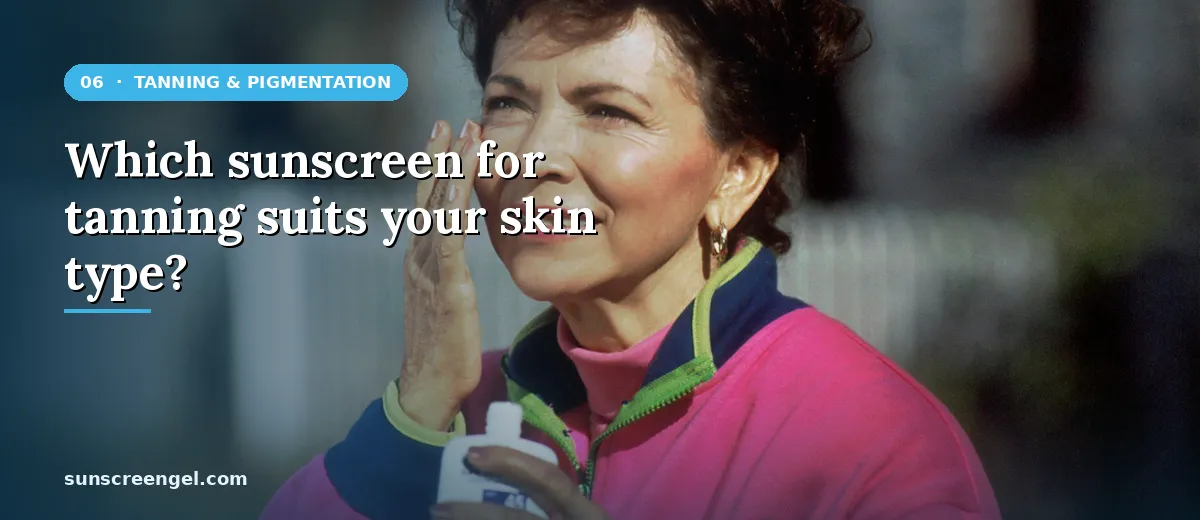
The best sunscreen for tanning is one you will wear every day. Texture decides that more than anything. So match the formula to your skin type and climate.
| Skin type | Best texture | Helpful extras | Watch out for |
|---|---|---|---|
| Oily or acne-prone | Gel or fluid | Niacinamide, non-comedogenic label | Heavy creams, strong fragrance |
| Combination | Gel-cream or light lotion | Hyaluronic acid, niacinamide | Thick balms on the T-zone |
| Dry | Cream or lotion | Glycerin, ceramides | Alcohol-heavy gels |
| Sensitive | Mineral or gentle hybrid | Zinc oxide, fragrance-free base | Essential oils, high alcohol |
| Pigmentation-prone | Tinted or high-PA formula | Iron oxides, niacinamide | Low PA ratings |
For humid cities such as Mumbai, Kolkata and Chennai, a gel sunscreen usually feels lightest. On the other hand, dry Delhi winters may call for a richer formula. See our guides to sunscreen for dry skin and sunscreen for sensitive skin for more detail.
Some ingredients also support an even tone. For example, niacinamide helps limit how pigment moves into skin cells. Our niacinamide sunscreen guide covers the research. Still, these extras only support the UV filters; they never replace them.
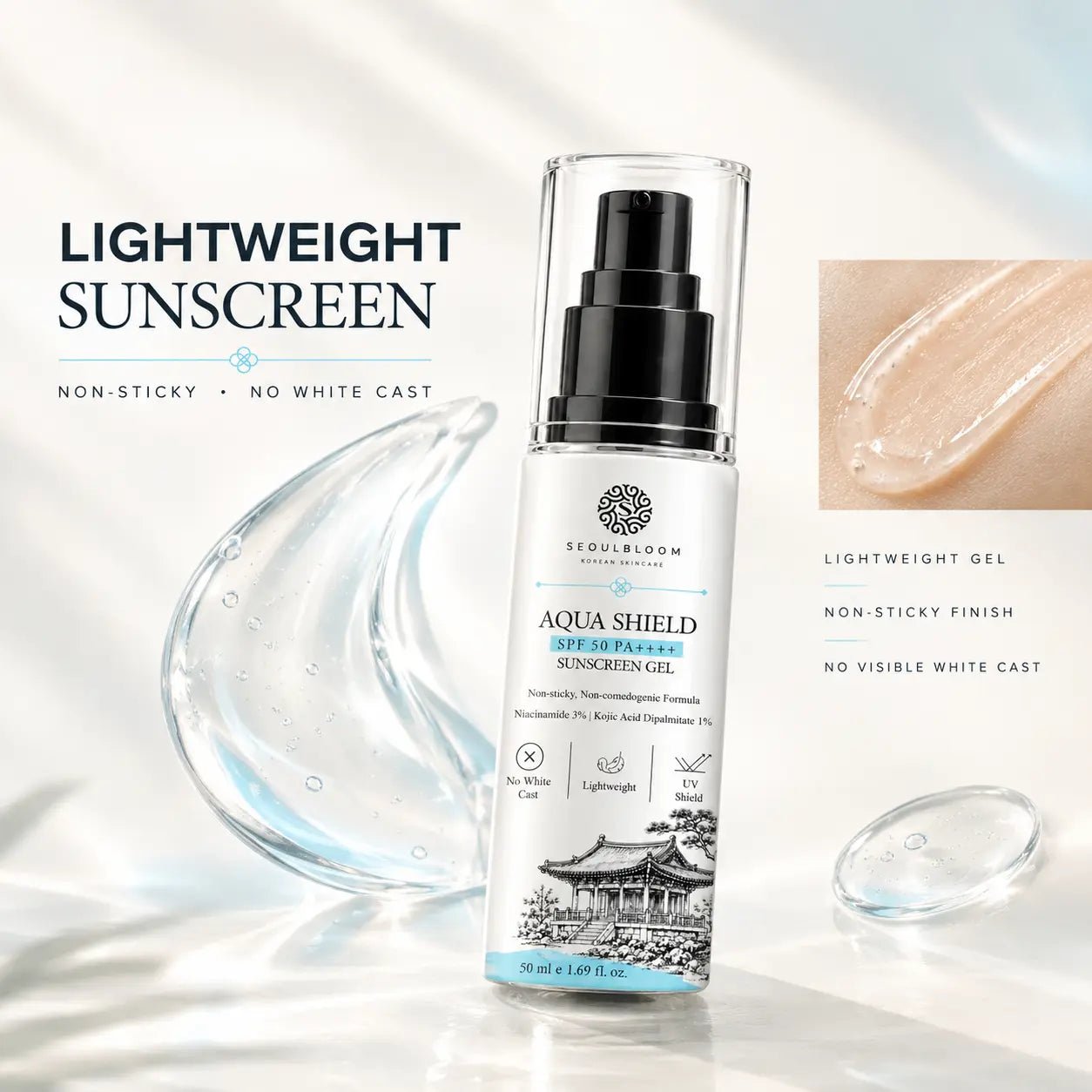
If you want a light, daily option for oily or combination skin, here is one we make.
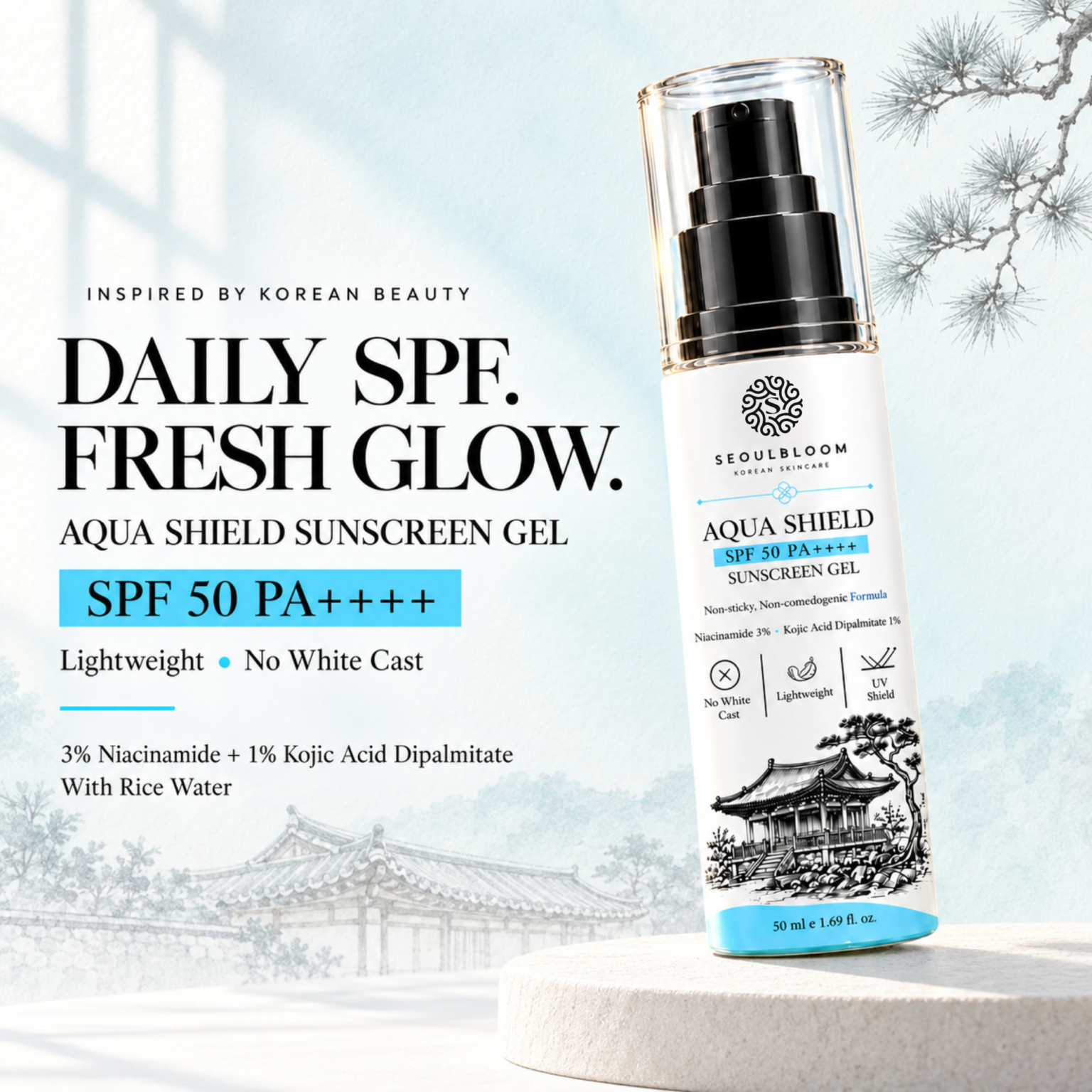
Our pick
SeoulBloom Aqua Shield SPF 50 PA++++ Sunscreen Gel
- SPF 50 PA++++ broad-spectrum UVA/UVB protection
- Lightweight, non-sticky gel — no white cast
- Non-comedogenic; suits oily & combination skin
- 3% niacinamide + 1% kojic acid dipalmitate for even-looking tone
- 60 ml · ₹799
₹999
How do you apply sunscreen for tanning protection correctly?
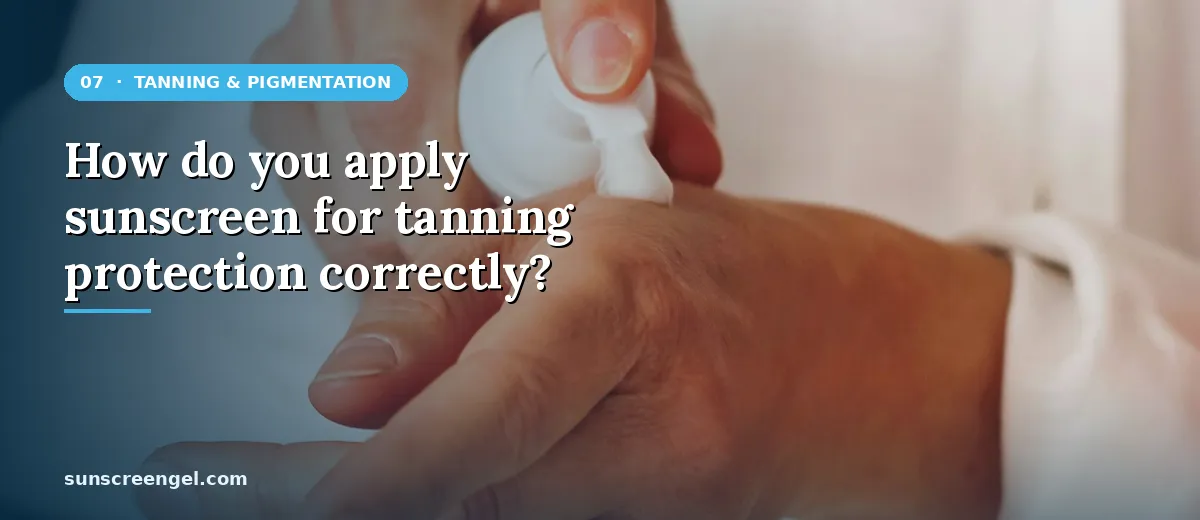
Apply enough, apply early and reapply often. These three habits matter more than the brand you buy. The American Academy of Dermatology recommends SPF 30 or higher, broad spectrum and water resistant.
- Cleanse and moisturise first, then let the moisturiser settle for a minute.
- Measure about two finger-lengths of sunscreen for the face and neck.
- Dot it over the forehead, cheeks, nose, chin and neck.
- Spread evenly, and include ears, eyelids, hairline and the back of the neck.
- Wait about 15 minutes before you step outside.
- Reapply every two hours outdoors, and right after sweating or swimming.
- Cover arms, hands and feet with a body sunscreen if they stay exposed.
How much sunscreen is enough?
Lab tests use 2 mg per square centimetre of skin. For the face and neck, that works out to roughly a quarter teaspoon. Most people use half of that or less. As a result, they get far lower protection than the label promises.
For the body, the AAD suggests about one ounce, or a shot glass. We explain the face measurement in detail in our guide on how much sunscreen to apply on your face.
Why do you still get tanning even with sunscreen?
Usually, the cause is how you use the product, not the product itself. Here are the most common reasons you still notice tanning while using sunscreen.
- Too little product. Half the amount can give far less than half the protection.
- No reapplication. Sweat, rubbing and time wear sunscreen off.
- Missed areas. Ears, neck, hands and feet often tan first.
- Low PA rating. A high SPF with weak UVA cover still lets you tan.
- Long midday exposure. Even SPF 50 cannot cancel hours in peak sun.
- Visible light. In deeper skin tones, visible light can also darken skin.
- Expired product. Old or heat-damaged sunscreen may lose strength.
Two-wheeler riders deserve a special mention. If you ride daily, your hands, forearms and the back of your neck face direct sun. So keep a small tube in your bag and wear gloves or sleeves.
Likewise, check where you store your sunscreen. A car dashboard in an Indian summer gets very hot. Heat can break down filters, so keep the tube in a cool, shaded spot.
Does tinted sunscreen help with tanning and visible light?

Yes, a tinted sunscreen can help with tanning in deeper skin tones. Tinted formulas contain iron oxides, which filter part of visible light. Ordinary sunscreens offer little protection against it.
Research shows that visible light can cause lasting darkening in skin types IV to VI. A review of tinted sunscreens on PubMed found that iron oxide formulas protect better against visible light. This matters for melasma, dark spots and post-acne marks.
However, choose the shade with care. Many tinted products suit fair skin only and leave an ashy look on Indian skin. Try a few shades on your jawline in daylight before you buy.
If you do not like tints, you can layer. For instance, apply your regular sunscreen first, then a tinted product or makeup with iron oxides on top.
How should you adjust sun protection across Indian seasons and cities?

Protect your skin every day, but change the texture and habits with the season. UV in India stays meaningful all year. In fact, WHO advises sun protection whenever the UV index reaches 3 or more.
| Season | Typical UV | What to use | Extra habits |
|---|---|---|---|
| Summer (March to June) | Very high to extreme | SPF 50, PA++++, sweat-resistant gel | Reapply every two hours; avoid 11 am to 3 pm |
| Monsoon (June to September) | Moderate to high, even when cloudy | Water-resistant gel or fluid | Reapply after getting wet |
| Post-monsoon (October to November) | High | SPF 50, PA+++ or more | Do not relax after the rains |
| Winter (December to February) | Moderate in the north, high in the south | Lotion or cream for dry skin | Watch hill trips; snow reflects UV |
Altitude raises exposure too. Trips to Leh, Manali, Shimla or Sikkim bring stronger UV than the plains. Therefore, pack SPF 50 PA++++ even for a cool winter holiday.
Beaches in Goa and Kerala need extra care as well. Sand and water reflect UV back onto the skin. So reapply after every swim, even with a water-resistant label.
Can sunscreen for tanning reverse an existing tan?

No, sunscreen does not remove a tan that already exists. However, it stops the tan from deepening, so your natural skin renewal can do its work.
Skin sheds and renews its outer cells over several weeks. As old, pigmented cells shed, a mild tan usually fades on its own. Then daily sunscreen prevents fresh pigment from replacing them.
Some cosmetic ingredients can support a more even look. Examples include niacinamide, vitamin C, kojic acid and azelaic acid. Brands such as SeoulBloom include some of these in their pigmentation range. Still, these products only help the look of uneven tone. They do not treat any skin condition, and sun protection remains the base.
Be careful with home remedies. Lemon juice, raw baking soda and harsh scrubs can irritate skin. In turn, irritation can trigger more pigmentation in Indian skin.
What else protects your skin besides sunscreen?
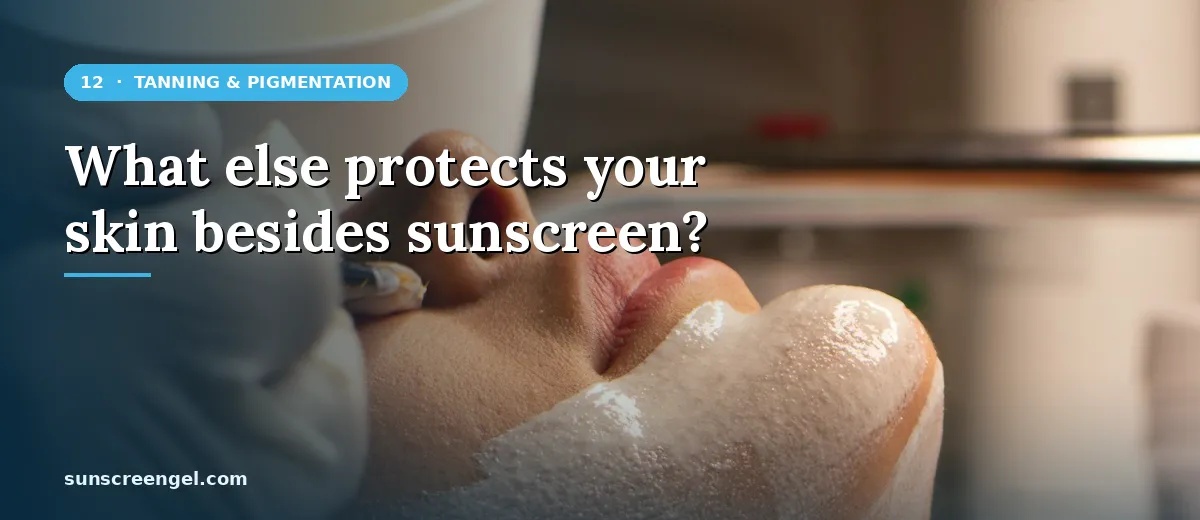
Shade, clothing and timing protect skin better than any cream. Sunscreen should fill the gaps they leave.
- Plan outdoor tasks before 10 am or after 4 pm when possible.
- Wear a wide-brimmed hat or carry an umbrella in summer.
- Choose tightly woven, long-sleeved cotton for long outdoor days.
- Use UV-protective sunglasses to shield eyes and the delicate skin around them.
- Add sun-protective sleeves or gloves if you ride a two-wheeler.
- Use a lip balm with SPF, because lips tan and dry out too.
Finally, avoid tanning beds completely. The Skin Cancer Foundation links indoor tanning before age 35 with a 75% higher melanoma risk. If you want a bronzed look, a self-tanner is the safer route.
When should you see a dermatologist?
See a dermatologist if pigmentation does not fade after two to three months of careful sun protection. Also book a visit if dark patches appear on both cheeks or keep spreading.
Some changes need prompt attention. For example, check any mole that changes size, shape or colour. The same goes for a sore that does not heal or a spot that bleeds.
Melasma, for instance, often needs prescription treatment and close follow-up. A dermatologist can also advise on peels or lasers when suitable. Meanwhile, keep wearing sunscreen daily, since every treatment depends on it.
For more reading, browse our tanning and pigmentation guides or explore all sunscreen topics.
Frequently asked questions
Does sunscreen for tanning stop a tan completely?
No. Sunscreen reduces UV exposure but never blocks all of it. So you may still tan slightly, especially with long exposure, too little product or no reapplication.
Which SPF is best to prevent tanning in India?
SPF 30 is the minimum for daily use. For long outdoor hours, choose SPF 50 with PA++++ because the PA rating shows UVA protection, which drives most tanning.
Can I tan indoors or in a car?
Yes. UVA passes through most window glass. If you sit near a sunny window or drive for long periods, wear a broad-spectrum sunscreen.
Do I need sunscreen for tanning on cloudy monsoon days?
Yes. Much UVA passes through clouds, so you can tan on overcast days. Use a water-resistant formula and reapply after you get wet.
Will sunscreen remove my existing tan?
No. Sunscreen prevents new tanning. A mild tan usually fades over several weeks as skin renews itself, provided you keep protecting it.
Is a tinted sunscreen better for Indian skin?
It can help. Iron oxides in tinted formulas filter part of visible light, which can darken deeper skin tones. Pick a shade that matches your skin.
How often should I reapply sunscreen outdoors?
Reapply every two hours, and right after sweating, swimming or towelling off. Indoors, one generous morning layer is usually enough unless you sit near windows.
How we researched this guide: We reviewed the top Indian and global pages for this keyword, including brand blogs and Cleveland Clinic and Healthline explainers, and noted gaps on PA/PPD, application amount and visible light. We then checked every factual claim against the AAD, WHO, Skin Cancer Foundation and a PubMed review on tinted sunscreens. Read our editorial policy.
Sources & further reading
- American Academy of Dermatology: How to apply sunscreen
- Skin Cancer Foundation: Tanning & your skin
- World Health Organization: Ultraviolet radiation fact sheet
- Cleveland Clinic: Does sunscreen prevent tanning?
- Photoprotection beyond ultraviolet radiation: A review of tinted sunscreens (PubMed)

Written & fact-checked by
SeoulBloom Editorial Team — the skincare research and product team behind SeoulBloom. We formulate and sell sunscreen for Indian skin, test textures in Indian heat and humidity, and check every claim against dermatology bodies (AAD, WHO) and peer-reviewed research. Updated 20 November 2026. How we write & review.
Disclosure: SunscreenGel.com is run by the team behind SeoulBloom, and we link to SeoulBloom products where they fit. This article is for general education, not medical advice — see a dermatologist for skin conditions. Read our disclaimer. Last reviewed November 2026.