Quick answer: Dot and Key sunscreen is a good, affordable SPF 50+ PA++++ range for Indian skin. Pick the Watermelon or Cica gel for oily skin, the Blueberry cream for dry or sensitive skin, and Strawberry Dew for a tint. Apply a teaspoon to the face and reapply every two hours.
Key takeaways
- Every Dot & Key face sunscreen in this review lists SPF 50+ and PA++++.
- Watermelon, Dragon Fruit and Cica gels suit oily and combination skin best.
- The Blueberry Barrier Repair cream with ceramides suits dry or sensitive skin.
- Strawberry Dew is the tinted option; test the shade on your jawline first.
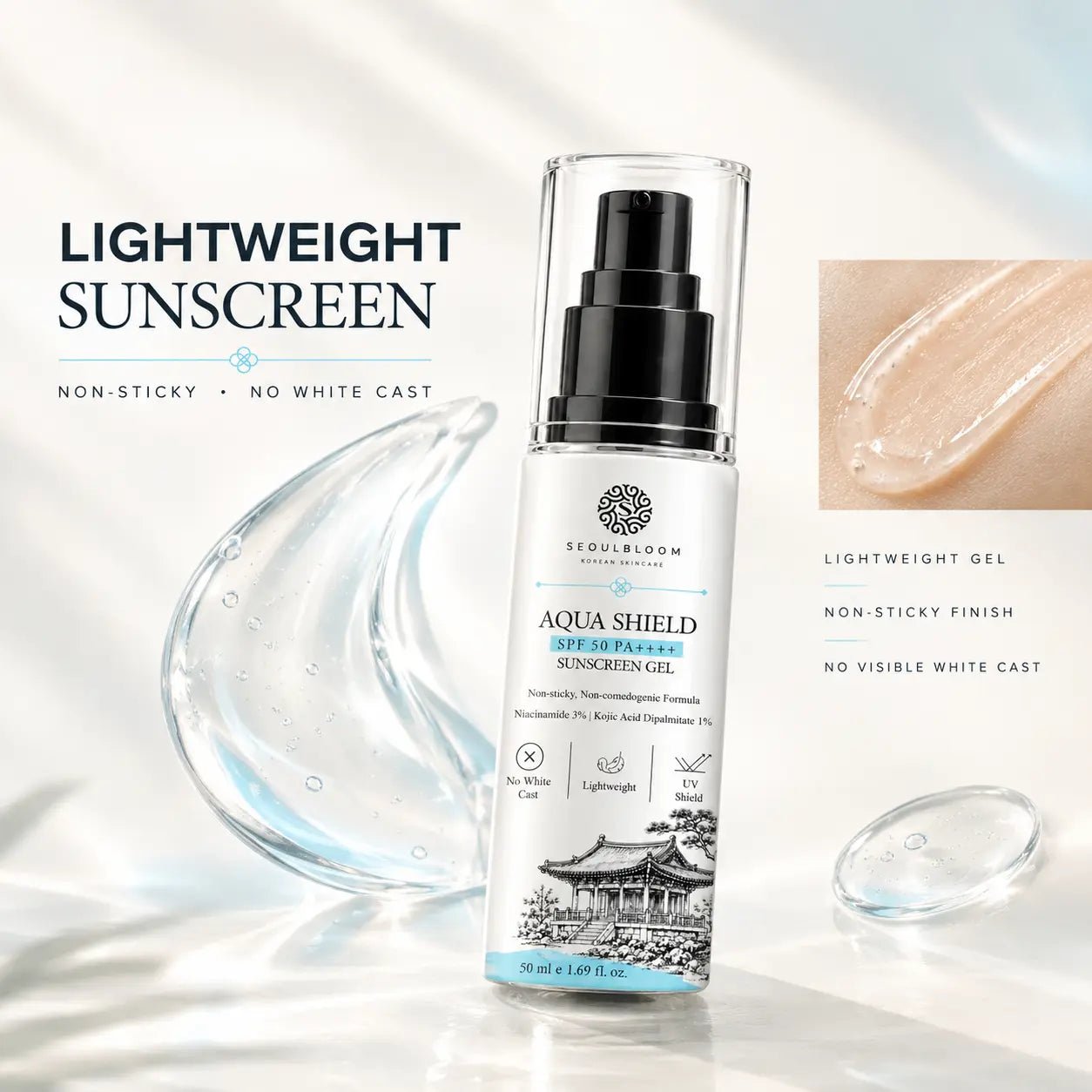
- SeoulBloom Aqua Shield is a pricier gel alternative with 3% niacinamide and 1% kojic acid dipalmitate.
- Whatever you choose, use about a teaspoon for the face and reapply every two hours outdoors.
Dot and Key sunscreen is one of the most searched sunscreen ranges in India, and for good reason. The brand offers fruity, lightweight SPF 50+ PA++++ formulas at friendly prices. However, with seven or more variants, choosing the right one can feel confusing.
So, this guide breaks down each variant, what its label really means and which skin type it suits. Then we compare it fairly with our own SeoulBloom Aqua Shield gel. Finally, we cover how much to apply, because even the best formula fails when you use too little.
In this article
- What is Dot and Key sunscreen known for?
- Which Dot & Key sunscreen variants are available in India?
- What do SPF 50 and PA++++ mean on the label?
- Should you choose chemical or mineral UV filters?
- Is Dot and Key sunscreen good for oily skin?
- Which Dot & Key sunscreen suits dry or sensitive skin?
- Does Dot & Key tinted sunscreen leave a white cast?
- How does Dot and Key sunscreen compare with SeoulBloom Aqua Shield?
- Which sunscreen should you pick for your skin type and city?
- How much sunscreen should you apply, and how often?
- Do you need sunscreen indoors and during the monsoon?
- What common mistakes reduce sun protection?
- What is our verdict on Dot and Key sunscreen?
- FAQ
What is Dot and Key sunscreen known for?

Dot and Key sunscreen is best known for fruity, lightweight formulas with SPF 50+ PA++++ on the label. The Indian brand built its range around textures that feel comfortable in heat and humidity.
Most variants pair UV filters with a “hero” extract, such as watermelon, strawberry or blueberry. In addition, many add skincare actives like niacinamide, hyaluronic acid or ceramides. As a result, the range looks more like a skincare shelf than a single product.
In a January 2026 press release, the brand called its sunscreens broad-spectrum. It also said in-vivo testing backs its SPF claims. In-vivo testing means the lab measures SPF on human skin under controlled conditions. That is a good sign, although you should still apply enough product for the rated protection.
Which Dot & Key sunscreen variants are available in India?

Dot & Key sells at least seven face sunscreens in India, each with a different texture and skin-type focus. All the variants below carry SPF 50+ and PA++++ according to the brand and its retail listings.
| Variant | Texture | Key ingredients (as listed) | Brand says it suits |
|---|---|---|---|
| Watermelon Cooling | Aqua-gel | Watermelon, beetroot, hyaluronic acid | Oily, normal, combination |
| Vitamin C + E Super Bright | Water-light | Ascorbyl glucoside, vitamin E, blood orange | All skin types |
| Strawberry Dew Tinted | Tinted, several shades | Strawberry extract, niacinamide, hyaluronic acid | All skin types |
| Dragon Fruit Bounce | Cushion-gel | Dragon fruit, ectoin, niacinamide | Oily, combination |
| Cica Calming Mattifying | Matte gel-cream | Centella asiatica (cica), niacinamide | Oily, acne-prone |
| Blueberry Hydrate Barrier Repair | Cream | 5 ceramides, hyaluronic acid, blueberry | Dry, sensitive |
| Mango Detan Gel | Oil-free gel | Alpha arbutin, niacinamide, mango | Tan-prone skin |
Prices change often. At the time of writing, most 50 ml or 80 g packs list between roughly ₹445 and ₹600 MRP, and online stores frequently discount them. Smaller 30 g packs also exist for some variants.
Dot & Key Watermelon Cooling Sunscreen: the bestseller
The Watermelon Cooling Sunscreen is the most searched Dot & Key sunscreen. It uses an aqua-gel base with watermelon and beetroot extracts plus hyaluronic acid. Many buyers like the cooling feel on hot Indian afternoons. Since it is a gel, it usually suits oily and combination skin better than very dry skin.
Dot & Key Vitamin C + E and Strawberry Dew tinted sunscreen
The Vitamin C + E Super Bright Sunscreen uses ascorbyl glucoside, a stable vitamin C derivative, with vitamin E. Meanwhile, the Strawberry Dew Tinted Sunscreen adds a light tint in shades such as Peony, Warm Ivory and Beige. The brand also calls the tinted version water and sweat resistant. However, you still need to reapply after sweating or swimming.
Dot & Key Cica, Dragon Fruit and Blueberry sunscreens
The Cica Calming Mattifying sunscreen targets oily, acne-prone skin with centella and niacinamide. Similarly, the Dragon Fruit Bounce gel uses ectoin and niacinamide for a bouncy, light finish. By contrast, the Blueberry Hydrate Barrier Repair cream adds five ceramides for dry or sensitive skin. One retail listing also mentions 80-minute water resistance for this cream.
What do SPF 50 and PA++++ mean on the label?

SPF measures protection against UVB rays, which cause sunburn. PA measures protection against UVA rays, which drive tanning, pigmentation and skin ageing.
The Skin Cancer Foundation recommends SPF 30 or higher for daily use. It also suggests SPF 50 or higher for long outdoor days. Both UVA and UVB contribute to skin cancer, so a “broad-spectrum” label matters.
PA grades come from Japan and run from PA+ to PA++++. According to a Japanese clinic’s guide, PA++++ means a UVA protection factor of 16 or above. Labs measure this with the PPD (persistent pigment darkening) method. In practice, PA++++ is the highest UVA grade you will see in India.
Should you choose chemical or mineral UV filters?

Both filter types protect well when you apply enough. The right choice mostly depends on your skin tone, sensitivity and texture preference.
Mineral filters, namely zinc oxide and titanium dioxide, sit on the skin and scatter or absorb UV. They rarely sting, so many people with sensitive skin like them. However, they can leave a white or grey cast on medium and deep Indian skin tones.
Chemical (organic) filters absorb UV and turn it into a small amount of heat. They usually give clearer, lighter textures that suit humid weather. Newer filters such as bemotrizinol offer broad UVA and UVB coverage and good stability.
Most Indian gel sunscreens, including many fruity ones, use chemical or hybrid filter blends. So, read the INCI list on the carton. If a product stings your eyes, try a different filter mix rather than giving up on sunscreen.
Is Dot and Key sunscreen good for oily skin?
Yes, several Dot and Key sunscreen options suit oily skin, especially the Watermelon, Dragon Fruit and Cica variants. These three use gel or matte gel-cream bases that feel lighter than classic creams.
For oily skin, texture matters more than the fruit on the label. First, look for “non-comedogenic” or “oil-free” claims. Next, choose a gel that dries down fast. Finally, test it in real Mumbai or Kolkata humidity before buying the large pack.
The Cica Calming Mattifying sunscreen is the most matte option in the range. On the other hand, the Watermelon gel gives a dewier, cooling finish. If you get acne often, patch test first and see a dermatologist for active breakouts. Our guide to gel sunscreen explains why gels usually work better for oily Indian skin.
Which Dot & Key sunscreen suits dry or sensitive skin?

The Blueberry Hydrate Barrier Repair sunscreen is the Dot & Key sunscreen most aimed at dry and sensitive skin. It uses a cream base with ceramides and hyaluronic acid.
Dry skin often feels tight under gel sunscreens, particularly in Delhi or Chandigarh winters. Therefore, a creamier texture with barrier-friendly ingredients usually feels better. You can also layer a simple moisturiser underneath a lighter gel.
Sensitive skin needs extra care. Fragrance and some fruit extracts can irritate reactive skin. So, check the full ingredient list and patch test on your jaw for a few days. See our guides on sunscreen for dry skin and sunscreen for sensitive skin for more detail.
Does Dot & Key tinted sunscreen leave a white cast?

The Strawberry Dew tinted Dot & Key sunscreen comes in shades, so it aims to blend rather than leave a white cast. Still, shade match depends on your undertone.
Most Dot & Key gels use a clear, water-light base, which also helps avoid a grey film on deeper Indian skin tones. However, mineral filters like zinc oxide and titanium dioxide can leave a cast in some formulas. A tint offsets that effect. Tinted products with iron oxides may also offer some extra help against visible light, which matters for melasma-prone skin.
Before buying, test the shade on your jawline in daylight. If the tint looks ashy or orange, a clear gel may suit you better.
How does Dot and Key sunscreen compare with SeoulBloom Aqua Shield?

Dot and Key sunscreen wins on variety and price, while SeoulBloom Aqua Shield focuses on one gel formula with tone-evening actives. Both carry SPF 50 and PA++++ ratings.
We make Aqua Shield, so we tried to keep this comparison factual. The table below sets the Watermelon Cooling gel, the closest match in texture, against Aqua Shield.
| Feature | Dot & Key Watermelon Cooling | SeoulBloom Aqua Shield |
|---|---|---|
| SPF / PA | SPF 50+ PA++++ | SPF 50 PA++++ |
| Texture | Aqua-gel, cooling | Lightweight, non-sticky gel |
| Key actives | Watermelon, beetroot, hyaluronic acid | 3% niacinamide, 1% kojic acid dipalmitate |
| White cast | Brand claims none | No white cast |
| Comedogenicity claim | Check pack | Non-comedogenic |
| Pack and price | 50 ml, about ₹445 MRP | 60 ml, ₹799 |
| Best for | Oily to normal skin wanting a cooling feel | Oily or combination skin with uneven-looking tone |
In short, Dot & Key costs less per ml. Aqua Shield, on the other hand, adds niacinamide and kojic acid dipalmitate for people who also care about dullness and uneven-looking tone. Neither product treats pigmentation on its own. Daily SPF simply helps stop UV from making marks look darker.
Our pick
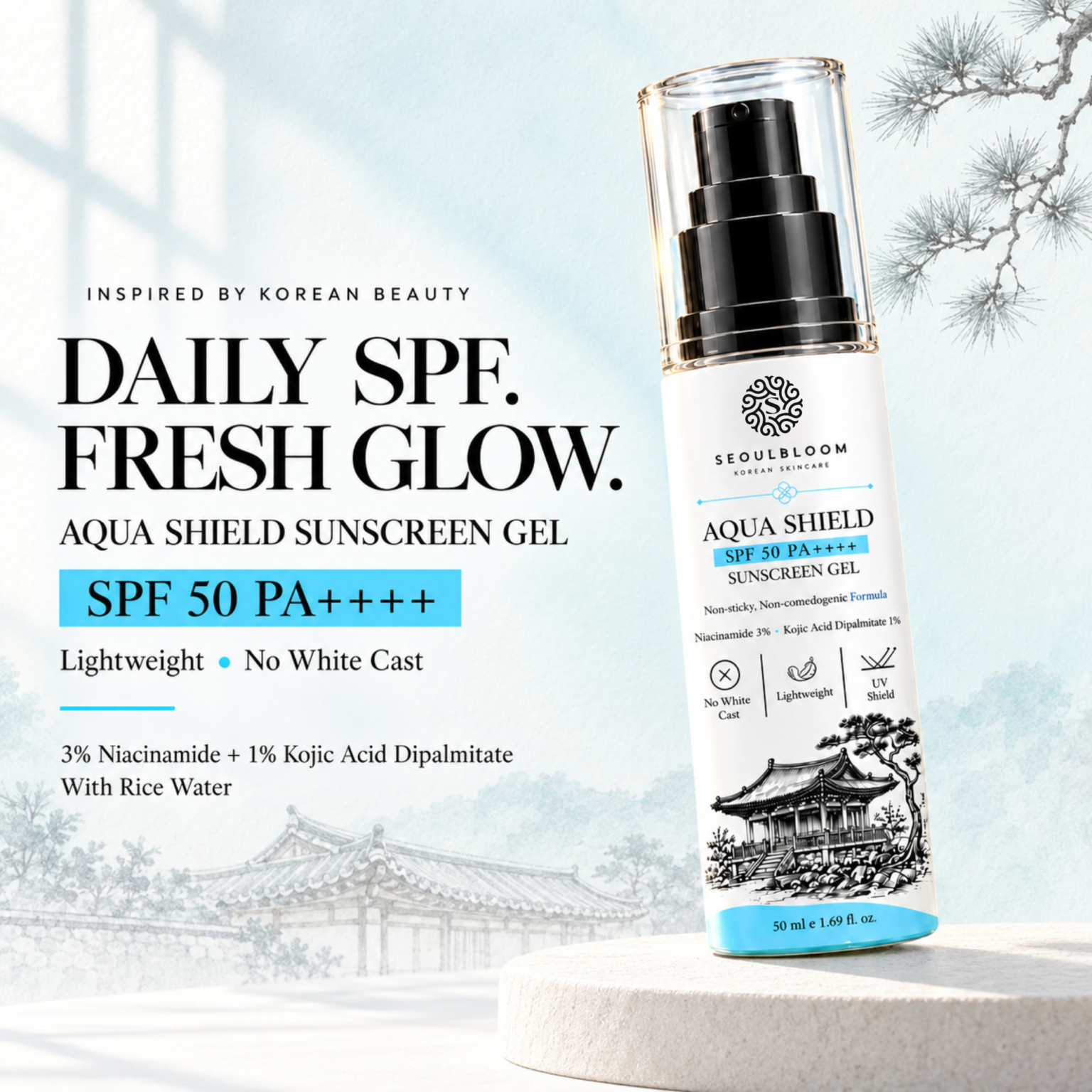
SeoulBloom Aqua Shield SPF 50 PA++++ Sunscreen Gel
- SPF 50 PA++++ broad-spectrum UVA/UVB protection
- Lightweight, non-sticky gel — no white cast
- Non-comedogenic; suits oily & combination skin
- 3% niacinamide + 1% kojic acid dipalmitate for even-looking tone
- 60 ml · ₹799
₹999
If you want to browse other options, see the full SeoulBloom sunscreen range.
Which sunscreen should you pick for your skin type and city?

Pick the texture that matches your skin first, then adjust for your city’s season. The table below gives a quick starting point.
| Your skin and climate | Texture to look for | Example options |
|---|---|---|
| Oily skin, humid city (Mumbai, Chennai, Kolkata) | Gel or matte gel-cream | Dot & Key Cica or Watermelon; SeoulBloom Aqua Shield |
| Combination skin, dry summer (Delhi, Jaipur) | Light gel | Dot & Key Dragon Fruit; SeoulBloom Aqua Shield |
| Dry skin, north Indian winter | Cream with ceramides | Dot & Key Blueberry Barrier Repair |
| Uneven-looking tone or tan-prone | Gel with niacinamide | Dot & Key Mango Detan; SeoulBloom Aqua Shield |
| Want light coverage | Tinted | Dot & Key Strawberry Dew |
Also, think about your day. Commuters in Bengaluru traffic need a formula they will reapply happily. Similarly, outdoor workers need water-resistant options during the monsoon. Our niacinamide sunscreen guide covers tone-evening options in more depth.
How much sunscreen should you apply, and how often?

Use at least one teaspoon for your face and neck, and reapply every two hours outdoors. The American Academy of Dermatology also advises about one ounce, roughly a shot glass, for exposed body skin.
- Cleanse and moisturise your skin first, if you need a moisturiser.
- Squeeze two finger-lengths of sunscreen, or about a teaspoon, for the face and neck.
- Dot it across the forehead, cheeks, nose, chin and neck, then spread evenly.
- Don’t forget the ears, hairline and the back of the neck.
- Wait about 15 minutes before you step outside.
- Reapply every two hours outdoors, and right after sweating or swimming.
Most people apply far less than this. In that case, the real protection drops well below the SPF on the tube. The US FDA also recommends pairing sunscreen with shade, hats and sunglasses.
Do you need sunscreen indoors and during the monsoon?

Yes, in most cases. UVA rays pass through clouds and ordinary window glass, so overcast monsoon days still carry UV exposure.
During the Mumbai or Kerala monsoon, many people skip sunscreen because the sky looks grey. Yet UVA keeps driving tanning and the look of dark spots. Similarly, if you sit beside a sunny office window in Hyderabad or Pune, your face still gets UVA.
Indoors and away from windows, one generous morning layer is usually enough. On the other hand, if you step out often, carry a small tube for reapplication. A light gel also feels less sticky in monsoon humidity than a heavy cream. Finally, pair sunscreen with an umbrella, a cap and sunglasses on bright days.
What common mistakes reduce sun protection?

The biggest mistake is using too little product. Even a top-rated SPF 50 fails if you apply a thin layer.
- Skipping cloudy days. UVA passes through clouds, so monsoon days still need sunscreen.
- Forgetting reapplication. Sweat, towels and touching your face wear sunscreen off.
- Relying on makeup SPF. Foundation or compact rarely goes on thick enough to match the label.
- Ignoring indoor windows. UVA can pass through glass near car and office windows.
- Using expired tubes. Check the expiry date, especially after a hot summer in the car.
What is our verdict on Dot and Key sunscreen?

Dot and Key sunscreen is a solid, affordable choice for many Indian skin types, provided you pick the right variant. The range gives oily, dry, tan-prone and tint-loving users a clear option each.
Who might prefer a different sunscreen?
Some people may want something else. For example, very sensitive or eczema-prone skin may do better with a fragrance-free mineral formula. Likewise, swimmers and outdoor athletes should look for a clearly labelled water-resistant product. If you have melasma, ask a dermatologist about tinted, high-PA sunscreen alongside your treatment plan.
Our pick by skin type
Choose the Watermelon or Cica gels for oily skin. Instead, pick the Blueberry cream for dry or sensitive skin. If you also want niacinamide and kojic acid dipalmitate in a single gel, SeoulBloom Aqua Shield SPF 50 PA++++ is a reasonable alternative. Above all, the best sunscreen is the one you apply generously every day. For more brand comparisons, browse our Korean and Indian sunscreen guides or the full sunscreen topics hub.
Frequently asked questions
Is Dot and Key sunscreen good for daily use?
Yes. Dot and Key sunscreen variants list SPF 50+ PA++++, which exceeds the SPF 30 minimum that dermatologists suggest for daily use. Choose the texture that suits your skin and apply it every morning.
Which Dot and Key sunscreen is best for oily skin?
The Cica Calming Mattifying sunscreen gives the most matte finish. Alternatively, the Watermelon Cooling and Dragon Fruit Bounce gels feel light and suit oily or combination skin.
Does Dot and Key sunscreen leave a white cast?
Most Dot & Key gels use a clear base and the brand claims no white cast. The Strawberry Dew version is tinted, so check the shade against your skin tone in daylight.
Is Dot and Key sunscreen safe for sensitive skin?
The Blueberry Barrier Repair cream targets dry and sensitive skin. Still, fruit extracts or fragrance may bother some people, so patch test for a few days first.
Can I use Dot and Key sunscreen under makeup?
Yes. Let the sunscreen set for a few minutes before primer or foundation. Remember that makeup does not replace reapplication during long days outdoors.
How often should I reapply sunscreen in Indian summers?
Reapply every two hours when outdoors, and straight after sweating or swimming. Indoors, away from windows, one generous morning layer is usually enough.
Is Dot and Key sunscreen safe for kids or during pregnancy?
Ask your paediatrician or doctor before using any new sunscreen on children or during pregnancy. They can advise on the right formula and filters for your situation.
How we researched this guide: We reviewed the top Google results for this keyword, including Dot & Key’s own sunscreen guide, retailer listings on Nykaa and Purplle, and independent Indian blogs. We checked product facts against the brand’s 2026 press release and checked sun-safety advice against the AAD, Skin Cancer Foundation and FDA. Read our editorial policy.
Sources & further reading
- American Academy of Dermatology: How to apply sunscreen
- Skin Cancer Foundation: Sunscreen & Your Skin
- U.S. FDA: Sunscreen
- Japanese Sunscreen Guide: SPF and PA Ratings Explained
- Dot & Key press release on its sunscreen range (Jan 2026)

Written & fact-checked by
SeoulBloom Editorial Team — the skincare research and product team behind SeoulBloom. We formulate and sell sunscreen for Indian skin, test textures in Indian heat and humidity, and check every claim against dermatology bodies (AAD, WHO) and peer-reviewed research. Updated 20 November 2026. How we write & review.
Disclosure: SunscreenGel.com is run by the team behind SeoulBloom, and we link to SeoulBloom products where they fit. This article is for general education, not medical advice — see a dermatologist for skin conditions. Read our disclaimer. Last reviewed November 2026.