Quick answer: A bemotrizinol sunscreen uses bemotrizinol (BEMT, also sold as Tinosorb S), a photostable chemical filter that absorbs both UVA and UVB with no white cast. The US FDA added it in June 2026, but India and Europe already permit it. For Indian buyers, SPF, PA rating and generous daily use still matter more than the filter name.
Key takeaways
- Bemotrizinol (BEMT, Tinosorb S) is one chemical filter that covers both UVA and UVB.
- The US FDA added it on 9 June 2026; the first US products reached shelves in November 2026.
- Indian standards already permit bemotrizinol, reportedly up to 10%, so it is not new here.
- It is photostable, leaves no white cast and shows low skin absorption in FDA-reviewed data.
- SPF 30–50, PA+++ or higher, about a teaspoon for the face and two-hourly reapplication matter more than any single filter.
Bemotrizinol sunscreen is suddenly everywhere in skincare news, because the first US formulas with this filter reached store shelves in November 2026. The Associated Press report called it the first new sunscreen type in America in more than 25 years.
But what does that mean for you in India, where heat, humidity and strong UV are daily facts? In this guide, we explain what bemotrizinol is, how it compares with zinc oxide and avobenzone, whether it is safe, and whether Indian buyers need to switch. Spoiler: the filter is good news, yet the basics still decide how well you are protected.
In this article
- What is bemotrizinol sunscreen?
- Why is bemotrizinol in the news this November?
- How does bemotrizinol sunscreen work on UVA and UVB?
- Bemotrizinol sunscreen vs other UV filters: how does it compare?
- Is bemotrizinol sunscreen safe?
- Are bemotrizinol sunscreens allowed in India?
- What does the FDA news change for buyers in India?
- How do you spot bemotrizinol on an ingredient label?
- How should Indian buyers choose a bemotrizinol sunscreen?
- Who should choose a bemotrizinol sunscreen?
- Does the filter matter more than SPF, PA and amount?
- How do you apply bemotrizinol sunscreen correctly in Indian weather?
- Bemotrizinol sunscreen myths vs facts
- FAQ
What is bemotrizinol sunscreen?

A bemotrizinol sunscreen is any sunscreen that uses bemotrizinol as one of its UV filters. Bemotrizinol is a chemical (organic) filter that absorbs both UVA and UVB rays. In short, one molecule covers a wide band of sunlight.
You may also see it called BEMT, Tinosorb S, Parsol Shield or Escalol S. On an Indian ingredient list, it usually appears under its INCI name: bis-ethylhexyloxyphenol methoxyphenyl triazine. It is oil-soluble, so brands often place it in creams, lotions and gel-creams. However, a water-dispersible form also exists, so it can show up in lighter gels too.
According to its Wikipedia entry, the filter has peak absorption at about 310 nm (UVB) and 340 nm (UVA). Europe has allowed it since 2000. For background on other filter names, see our sunscreen ingredients glossary.
Why is bemotrizinol in the news this November?
Bemotrizinol is trending because the first US sunscreens made with it reached store shelves in mid-November 2026. The Associated Press called it the first new sunscreen type in the US in over 25 years.
The story started earlier. On 9 June 2026, the US Food and Drug Administration (FDA) added bemotrizinol to its over-the-counter sunscreen monograph. The FDA announcement allows it at up to 6% for adults and children aged six months and older. Earlier, the FDA had proposed the order on 12 December 2025. The final order then took effect on 9 August 2026, as the Federal Register notice records.
So why should a reader in Mumbai or Chennai care? Because many Indian buyers follow US skincare news on Instagram and YouTube. As a result, “FDA-approved filter” is now a marketing hook here too. This guide explains what is genuinely new, and what is simply old news with fresh packaging.
How does bemotrizinol sunscreen work on UVA and UVB?

A bemotrizinol sunscreen works by absorbing UV energy and releasing it as a tiny amount of heat. That stops the rays before they reach living skin cells.
Here is the key difference. Most older chemical filters cover only one part of the spectrum. For example, octinoxate covers mainly UVB, while avobenzone covers mainly UVA. Bemotrizinol covers both UVB and much of UVA in a single molecule. Therefore, formulators need fewer filters to reach broad-spectrum protection.
UVB rays cause most sunburn and tanning flare-ups. Meanwhile, UVA rays reach deeper and drive pigmentation, tanning and photo-ageing. In India, UVA stays high all year, even in a Delhi winter. That is why the UVA rating (PA in Asia) matters as much as SPF. Our SPF and PA explainer covers both ratings in detail.
Why is photostability such a big deal?
Photostability means a filter keeps working under sunlight instead of breaking down. Wikipedia cites data that 98.4% of bemotrizinol stays intact after 50 minimal erythemal doses of UV. In addition, it helps stabilise avobenzone, a common UVA filter that degrades quickly on its own. In practice, a well-built formula should hold its protection longer on a bright Jaipur afternoon.
Bemotrizinol sunscreen vs other UV filters: how does it compare?
A bemotrizinol sunscreen is not automatically “better” than a good zinc oxide or avobenzone formula. Instead, each filter has trade-offs. The table below compares the filters you will most often see on Indian labels.
| Filter | Type | Covers | White cast | Worth knowing |
|---|---|---|---|---|
| Bemotrizinol (BEMT, Tinosorb S) | Chemical | UVB + UVA | None | Very photostable; low skin absorption |
| Zinc oxide | Mineral | UVB + long UVA | Often visible | Gentle; can look grey on deeper skin |
| Titanium dioxide | Mineral | UVB + short UVA | Often visible | Gentle; weaker in long UVA |
| Avobenzone | Chemical | UVA | None | Needs stabilising partners |
| Octinoxate-type cinnamates | Chemical | UVB | None | Common in Indian gels; UVB only |
| Oxybenzone (benzophenone-3) | Chemical | UVB + short UVA | None | Widely used; more absorption data |
Notably, dermatologists at MD Anderson Cancer Center still list zinc oxide as a first choice for many people. However, they note that bemotrizinol is a strong option if you dislike the feel or look of mineral sunscreen. For many Indian skin tones, that white or grey cast is the main reason people skip SPF altogether.
Is bemotrizinol sunscreen safe?

Yes, current evidence suggests a bemotrizinol sunscreen is safe for everyday use. The FDA classes bemotrizinol as “generally recognised as safe and effective” for people aged six months and above.
According to the FDA, the filter shows low absorption through the skin into the body. AP reporting adds that the FDA reviewed studies with around 500 participants, and absorbed levels were nearly undetectable. Moreover, the filter has roughly two decades of use across Europe, Asia and Australia.
Still, “safe” does not mean “zero reactions”. Any sunscreen can irritate a small number of people. Usually, the culprit is fragrance, alcohol or another ingredient rather than the filter itself. If your skin stings easily, patch-test first. Our guide to sunscreen for sensitive skin explains how.
Finally, pregnancy data are limited for all filters, not just this one. So if you are pregnant, ask your doctor which sunscreen suits you.
What about reefs and the environment? “Reef safe” is a marketing phrase, not a regulated claim. Bemotrizinol is chemically different from oxybenzone and octinoxate, which some places have restricted. Even so, coral research on it is still limited. If you plan to snorkel in the Andamans or Lakshadweep, check any local rules and consider a rash guard as well.
Are bemotrizinol sunscreens allowed in India?

Yes, bemotrizinol sunscreens can already be sold in India, and they have been for years. India regulates sunscreens as cosmetics, and the permitted filters follow the Bureau of Indian Standards list.
A country-by-country UV filter comparison lists India’s limit for bemotrizinol at up to 10%, under IS 4707 (Part 4):2022. That matches the EU cap of 10%. In contrast, the new US limit is 6%. The comparison draws on a secondary summary, so always treat the product label as the final word.
In other words, the June FDA decision is big news for Americans. For Indians, it mostly confirms a filter that many local and imported sunscreens already use.
What does the FDA news change for buyers in India?

Very little changes on Indian shelves. The FDA move does not alter Indian rules, prices or the filters brands may use here.
However, it does change the marketing. Expect more labels and influencer posts shouting “FDA-approved filter” in the coming months. Here is how to read that claim calmly:
- A filter is only one part of a formula. The SPF, PA rating and texture matter just as much.
- Since India already permits bemotrizinol, it is not a new invention for Indian buyers.
- A higher price tag alone does not prove better protection.
- Meanwhile, the best sunscreen is still the one you apply generously every single day.
So if your current SPF 50 PA++++ sunscreen works for you, there is no need to switch just because of this headline.
How do you spot bemotrizinol on an ingredient label?

Look for “bis-ethylhexyloxyphenol methoxyphenyl triazine” in the ingredient (INCI) list. That long chemical name is bemotrizinol.
Some brands also print a short name on the front, such as “Tinosorb S” or “BEMT”. However, front-of-pack claims are marketing. The INCI list on the back is what counts. If you also want to avoid a white cast, check that zinc oxide or titanium dioxide is not high on the list.
Not sure what else is on the label? Then look up each name before you buy. A quick check takes a minute and saves money.
How should Indian buyers choose a bemotrizinol sunscreen?

Choose a bemotrizinol sunscreen the way you would choose any sunscreen: start with your climate, your skin type and the texture you enjoy. The filter is a bonus, not the whole decision.
Indian weather swings a lot through the year. As a result, the right base changes with the season, even when the filter stays the same. Use this table as a quick guide.
| Season | Typical conditions | Texture that tends to work |
|---|---|---|
| Summer (March–June) | High UV, heat, heavy sweat | Light gel or fluid; water-resistant for outdoor days |
| Monsoon (June–September) | Cloud cover, very high humidity | Non-sticky gel; UVA still passes through clouds |
| Post-monsoon (October–November) | Clear skies, strong sun returns | Gel or light lotion; keep PA++++ |
| Winter (December–February) | Dry air in the north, haze, snow in the hills | Lotion or gel-cream; higher SPF at altitude |
Next, consider your budget. Imported sunscreens with trending filters often cost far more in India. However, price does not equal protection. A ₹500–₹900 sunscreen with SPF 50 and PA++++ can protect just as well, provided you apply enough.
Finally, think about where you will use it. If you ride a two-wheeler in Bengaluru or Pune, pick a sweat-resistant formula. If you work indoors near a window, a lighter daily sunscreen is usually enough. Also, if you travel to Ladakh, Manali or Gulmarg this winter, remember that snow reflects UV and altitude raises exposure. In that case, reapply more often and protect your lips too.
Who should choose a bemotrizinol sunscreen?

A bemotrizinol sunscreen suits people who want broad-spectrum protection without a white cast. It is especially useful for deeper Indian skin tones that turn ashy under mineral formulas.
Oily and acne-prone skin?
The filter itself is not known to clog pores. Even so, the base matters more. Choose a light, non-comedogenic gel and avoid heavy oils, especially in humid Kolkata or Kochi.
Dry skin in winter?
Because bemotrizinol is oil-soluble, it often sits in creamier lotions. That can suit dry skin in a north Indian winter. Our sunscreen for dry skin guide covers layering.
Sensitive skin?
Early evidence suggests fewer reactions than many older chemical filters. Nevertheless, fragrance-free formulas and a patch test remain the safest route.
Does the filter matter more than SPF, PA and amount?

No. The filter type matters far less than the SPF, the PA rating and how much you apply. Even the best filter fails if you use too little.
| What to check | Good target for India | Why it matters |
|---|---|---|
| SPF | 30 minimum; 50 for strong sun | Measures UVB and burn protection |
| PA rating | PA+++ or PA++++ | Measures UVA and tanning protection |
| Broad spectrum | Must be stated | Confirms UVA and UVB cover |
| Amount | About 1 teaspoon for face and neck | Too little cuts protection sharply |
| Texture | One you will wear daily | Consistency beats a fancy filter |
For instance, our own pick for humid Indian days does not contain bemotrizinol at all. Instead, it combines several UV filters, including avobenzone and titanium dioxide, to reach SPF 50 PA++++ in a light gel. We say that openly because the honest answer is simple: a well-tested SPF 50 PA++++ sunscreen protects you, whichever approved filters it uses.
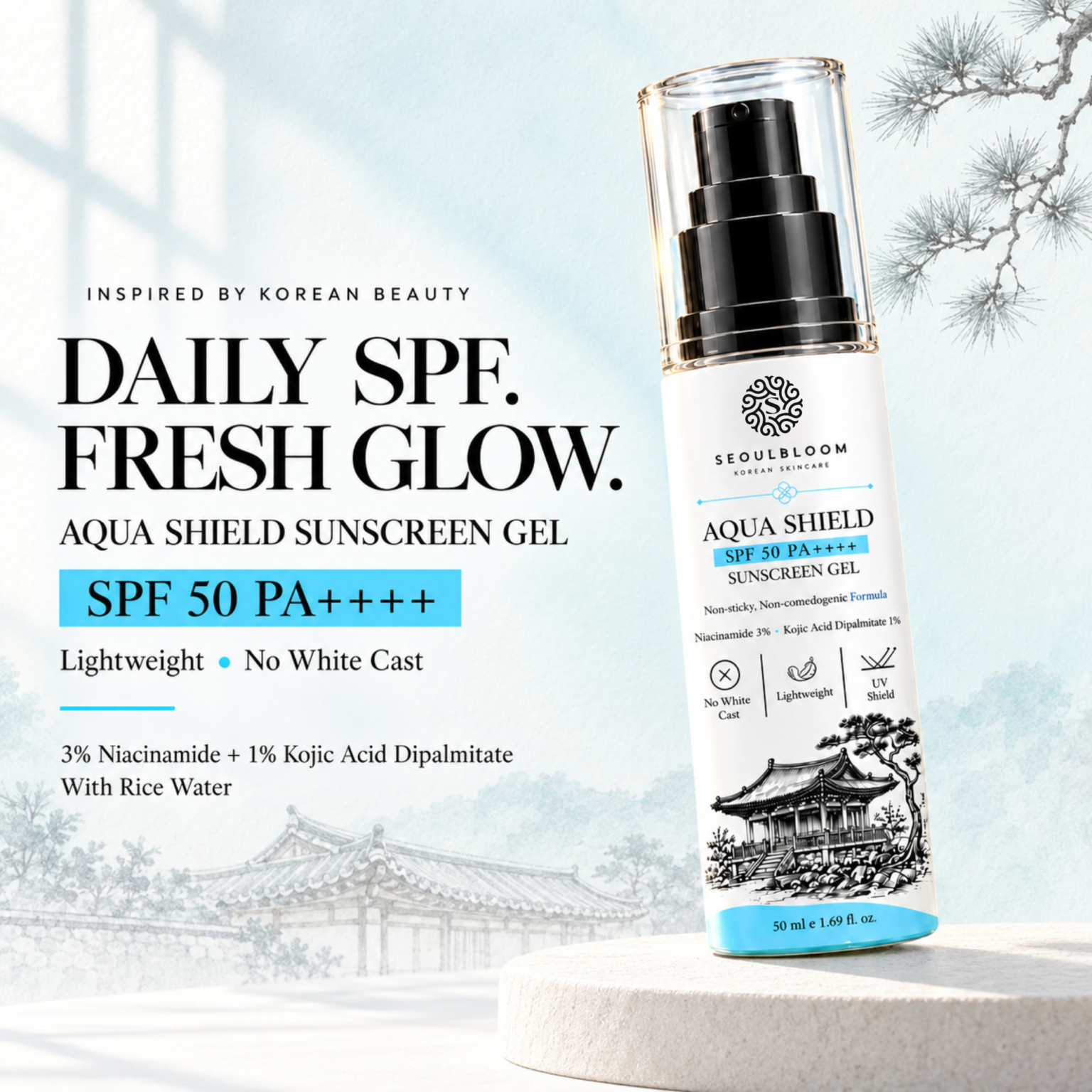
Our pick
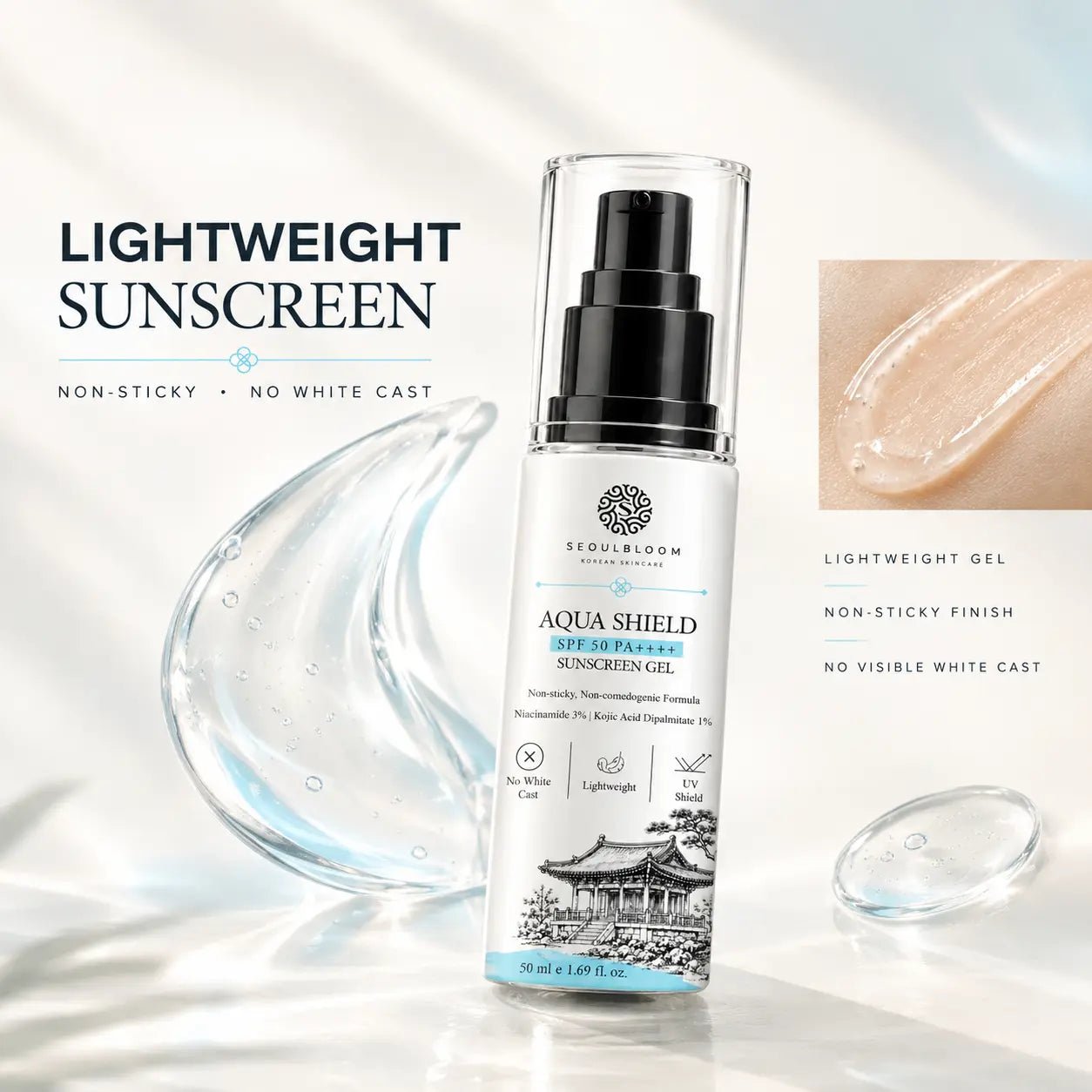
SeoulBloom Aqua Shield SPF 50 PA++++ Sunscreen Gel
- SPF 50 PA++++ broad-spectrum UVA/UVB protection
- Lightweight, non-sticky gel — no white cast
- Non-comedogenic; suits oily & combination skin
- 3% niacinamide + 1% kojic acid dipalmitate for even-looking tone
- 60 ml · ₹799
₹999
The SeoulBloom Aqua Shield SPF 50 PA++++ gel also adds 3% niacinamide for an even-looking tone. If you prefer a different texture, browse the full SeoulBloom sunscreen collection. Our gel sunscreen guide explains why gels suit humid weather.
How do you apply bemotrizinol sunscreen correctly in Indian weather?

Apply a bemotrizinol sunscreen the same way you would apply any sunscreen: generously, before you step out, and again every two hours outdoors. The American Academy of Dermatology advises SPF 30 or higher and about a teaspoon for the face.
- Start with clean skin. Then add a light moisturiser if your skin feels tight.
- Measure the amount. Use about a teaspoon, or two full finger-lengths, for face and neck.
- Apply 15 minutes before going out. Chemical filters need a short time to settle evenly.
- Cover the often-missed spots. Include ears, the hairline, the neck and the back of the hands.
- Reapply every two hours outdoors. Also reapply after sweating, swimming or wiping your face.
- Add shade and a hat. Between 10 am and 4 pm, sunscreen works best alongside shade.
Even photostable filters rub off with sweat and towels. So, on a sticky Mumbai commute or a Goa beach day, reapplication still matters. Check today’s levels on our UV index India page.
Bemotrizinol sunscreen myths vs facts
Viral posts often oversell new ingredients. Here are the claims we see most, checked against the sources above.
| Myth | Fact |
|---|---|
| Bemotrizinol is a brand-new invention | Europe has allowed it since 2000; only the US approval is new |
| It is newly allowed in India | Indian standards already permit it, reportedly up to 10% |
| It means you never need to reapply | Sweat and rubbing still remove it; reapply every two hours outdoors |
| It beats every mineral sunscreen | Zinc oxide remains an excellent, gentle option |
| It can fix pigmentation | No filter treats pigmentation; it only helps prevent new UV damage |
Ultimately, bemotrizinol is a welcome, well-studied filter. Yet it is one tool, not a miracle. Daily use, enough product and regular reapplication still do most of the work.
Frequently asked questions
What is bemotrizinol in sunscreen?
Bemotrizinol is a chemical UV filter that absorbs both UVA and UVB rays. It is also called BEMT, Tinosorb S or Parsol Shield. On labels, look for bis-ethylhexyloxyphenol methoxyphenyl triazine.
Is bemotrizinol the same as Tinosorb S?
Yes. Tinosorb S is a trade name for bemotrizinol, and Parsol Shield is another. They all refer to the same filter molecule.
Is bemotrizinol sunscreen available in India?
Yes. Indian standards already permit bemotrizinol, reportedly at up to 10%, and several sunscreens sold in India use it. Check the INCI list for bis-ethylhexyloxyphenol methoxyphenyl triazine.
Is bemotrizinol better than zinc oxide?
Not categorically. Bemotrizinol leaves no white cast and is very photostable, while zinc oxide is gentle and works immediately. Many good formulas combine filters, so choose the texture you will wear daily.
Is bemotrizinol safe for daily use?
Current evidence says yes. The US FDA classes it as safe and effective for people aged six months and older, and studies show low absorption into the body. As with any product, patch-test if your skin reacts easily.
Do I still need to reapply a bemotrizinol sunscreen?
Yes. Although the filter is photostable, sweat, water and touching your face remove sunscreen. Reapply every two hours outdoors and after swimming or heavy sweating.
Does bemotrizinol sunscreen help with tanning and pigmentation?
It helps prevent new UV-triggered tanning because it covers UVA as well as UVB. However, no UV filter treats existing pigmentation. Pair daily sunscreen with a dermatologist’s advice for stubborn dark spots.
How we researched this guide: We read the FDA’s June 2026 announcement and Federal Register notice, the AP report on the first US products, MD Anderson’s patient guide and Wikipedia’s chemistry entry. We also reviewed the top-ranking explainers from Indian brands, US dermatology blogs and lifestyle sites, and filled gaps they missed: Indian regulatory status, label-reading tips and how much product to apply. Read our editorial policy.
Sources & further reading
- FDA: FDA expands sunscreen options for the first time in 20 years (June 2026)
- Federal Register: Amending OTC Monograph M020 – Sunscreen Drug Products (10 June 2026)
- AP via RareJob: The first new sunscreen type in 25 years has arrived on US store shelves (19 Nov 2026)
- MD Anderson Cancer Center: Bemotrizinol 101 (July 2026)
- Wikipedia: Bemotrizinol
- American Academy of Dermatology: How to apply sunscreen
- Sunscreen UV filters by country (2026): 10 markets compared

Written & fact-checked by
SeoulBloom Editorial Team — the skincare research and product team behind SeoulBloom. We formulate and sell sunscreen for Indian skin, test textures in Indian heat and humidity, and check every claim against dermatology bodies (AAD, WHO) and peer-reviewed research. Updated 20 November 2026. How we write & review.
Disclosure: SunscreenGel.com is run by the team behind SeoulBloom, and we link to SeoulBloom products where they fit. This article is for general education, not medical advice — see a dermatologist for skin conditions. Read our disclaimer. Last reviewed November 2026.