Quick answer: The best sunscreen for sensitive skin is broad-spectrum, SPF 30 or higher (SPF 50 PA+++ or PA++++ in India), fragrance-free and ideally based on zinc oxide or titanium dioxide. Skip oxybenzone and heavy fragrance, patch test for a few days, and choose a texture that suits your skin type and season.
Key takeaways
- Mineral filters (zinc oxide, titanium dioxide) have the lowest allergy risk for reactive skin.
- Avoid fragrance, essential oils and oxybenzone; check for octocrylene if you reacted before.
- In India, choose SPF 50 with PA+++ or PA++++ and broad-spectrum protection.
- Patch test on the inner forearm for three to five days before full-face use.
- Press sunscreen in gently, use about a teaspoon for the face and reapply every two hours outdoors.
- See a dermatologist if every sunscreen burns or a rash spreads or blisters.
Finding a sunscreen for sensitive skin can feel like trial and error, especially when a new tube stings, itches or leaves your cheeks red. Yet skipping sunscreen is not the answer, because Indian sun can worsen redness, rosacea and pigmentation.
This guide explains why reactions happen and which ingredients to pick or avoid. It also covers the SPF and PA levels that suit Indian weather and how to patch test safely. Every key claim links to dermatology bodies or peer-reviewed research, so you can check the evidence yourself.
In this article
- Why does sensitive skin react to sunscreen?
- Mineral or chemical: which sunscreen for sensitive skin is gentler?
- Which ingredients should you avoid?
- Which ingredients help calm reactive skin?
- What SPF and PA should sunscreen for sensitive skin have?
- How to choose sunscreen for sensitive skin by concern
- How do you patch test a new sunscreen?
- How to apply sunscreen for sensitive skin without irritation
- How should you adjust for Indian seasons?
- Is a gel sunscreen for sensitive skin a good idea?
- Common mistakes that trigger flare-ups
- When should you see a dermatologist?
- FAQ
Why does sensitive skin react to sunscreen?
Sensitive skin reacts to sunscreen mostly because of a weak skin barrier or an allergy to one ingredient. In most cases, the trigger is fragrance, a preservative or a specific chemical UV filter. The SPF itself rarely causes the problem.
So what counts as “sensitive”? Dermatologists use the term for skin that stings, burns, itches or turns red after products that most people tolerate. It often overlaps with rosacea, eczema (atopic dermatitis) and acne-prone skin. In addition, over-exfoliation with retinoids, AHAs or scrubs can make normal skin behave like sensitive skin for weeks.
Reactions usually fall into three groups:
- Irritant reactions: stinging or burning within minutes, often from alcohol, fragrance or rubbing. This is the most common type.
- Allergic contact dermatitis: an itchy, red rash that appears a day or two later. A true allergy to one ingredient drives it.
- Photoallergic reactions: a rash that flares only after sunlight hits the product on your skin. Certain UV filters cause these.
Also, many people blame the sunscreen when sweat, heat or a tight mask causes the redness. That is why a careful patch test matters, and we explain it below.
Mineral or chemical: which sunscreen for sensitive skin is gentler?
For most reactive skin, a mineral sunscreen with zinc oxide or titanium dioxide is the gentler first choice. In fact, the American Academy of Dermatology (AAD) advises a zinc oxide and titanium dioxide formula if sunscreen stings or burns, or if you have rosacea.
Research backs this up. A 2023 review in the journal Dermatitis found oxybenzone was the UV filter most often reported as a contact and photocontact allergen. By contrast, the authors found no reported cases of allergic contact dermatitis to zinc oxide or titanium dioxide (Ekstein & Hylwa, PubMed).
Interestingly, mineral filters do not mainly “reflect” light. According to Cleveland Clinic, they mostly absorb UV, much like chemical filters. However, very little of them passes into the skin, which helps explain the lower reaction rate.
| Feature | Mineral (zinc oxide, titanium dioxide) | Chemical (organic) filters |
|---|---|---|
| Allergy risk | Very low; no reported allergic cases in the 2023 review | Low overall, but higher for oxybenzone and octocrylene |
| Stinging near eyes | Rare | More common, especially with sweat |
| White cast on Indian skin | Possible, though tinted and newer formulas help | Usually none |
| Texture | Can feel thicker or drier | Often lighter gels and fluids |
| Best for | Rosacea, eczema, very reactive skin | Sensitive skin that tolerates them and dislikes white cast |
When chemical filters can still work
Mineral is not the only answer, though. The National Rosacea Society notes that some people with sensitive skin actually do better with chemical sunscreens. Newer filters, such as Tinosorb S and Uvinul A Plus, have a good track record. Ultimately, the best formula is the one you can wear every single day without a flare.
Which ingredients should you avoid?
Start by skipping fragrance, essential oils, oxybenzone and high amounts of drying alcohol. The AAD also suggests avoiding parabens if your skin is allergy-prone and choosing products labelled for sensitive skin.
Fragrance deserves special attention. It is one of the most common causes of cosmetic allergy, and “natural” scents like lavender, citrus or rose oil count too. Similarly, a long list of plant extracts raises the odds that one of them will bother you.
Next, check for octocrylene if you have reacted to sunscreen before. A review of the evidence links it to contact and photocontact allergy, especially in adults with a past reaction to ketoprofen gel (PubMed review). However, most people use it without trouble.
| Look for | Approach with caution |
|---|---|
| Zinc oxide, titanium dioxide | Oxybenzone (benzophenone-3) |
| “Fragrance-free” (not just “unscented”) | Parfum, essential oils, citrus extracts |
| Glycerin, ceramides, panthenol | Denatured alcohol high on the list |
| Short ingredient list | Octocrylene, if you reacted before |
| “Non-comedogenic” for acne-prone skin | Heavy oils and butters on oily skin |
Our sunscreen ingredients glossary explains each filter in plain language, so you can read any label with confidence.
Which ingredients help calm reactive skin?
Barrier-supporting ingredients make a sunscreen easier to tolerate. Look for glycerin, ceramides, panthenol (pro-vitamin B5), allantoin and centella asiatica (cica).
Niacinamide is a special case. Many people find it soothing, and it may support the skin barrier. Still, a small group feels a warm flush from it, especially at high strengths. So if niacinamide serums have stung you before, patch test any sunscreen that contains it. Our niacinamide sunscreen guide explains how the two work together.
Also, keep the rest of your morning routine simple. A gentle cleanser, a plain moisturiser and sunscreen are enough. For ideas, SeoulBloom keeps a short list of barrier care basics for reactive routines.
What SPF and PA should sunscreen for sensitive skin have?
Choose SPF 30 or higher with broad-spectrum protection, and in India aim for SPF 50 with PA+++ or PA++++. SPF measures protection from UVB, the rays that cause sunburn. Meanwhile, the PA grade measures UVA protection, which drives tanning, pigmentation and ageing.
PA comes from the Japanese PPD (persistent pigment darkening) test. PA+ means a PPD of 2 to 4, while PA++++ means a PPD of 16 or more. Because UVA passes through clouds and window glass, a high PA matters even on grey monsoon days.
Notably, a higher SPF does not irritate more by itself. Instead, the filter type and the base formula decide comfort. Plus, sensitive conditions like rosacea and melasma often worsen with sun, so strong protection helps them. Check the UV index in India before long days outdoors, because it often climbs to very high levels from March to June.
| Label | What it means | Sensitive-skin tip |
|---|---|---|
| SPF 30 | Blocks about 97% of UVB when applied properly | Minimum for daily indoor-outdoor life |
| SPF 50 | Blocks about 98% of UVB | Best for Indian summers and commutes |
| PA+++ / PA++++ | High to very high UVA protection | Important for melasma and tanning |
| Broad spectrum | Covers both UVA and UVB | Non-negotiable |
| Water resistant | Holds up for 40 or 80 minutes of sweat or swimming | Useful in humid cities like Mumbai and Chennai |
How to choose sunscreen for sensitive skin by concern
Sensitive skin is not one skin type, so match the formula to your main concern. For a wider view, see our pillar guide on sunscreen by skin type.
Rosacea and redness
Start with a pure mineral formula. Then consider a tinted version, since a slight tint hides redness and reduces white cast. Also, avoid menthol, camphor and alcohol-heavy gels, because they can trigger flushing.
Eczema-prone or dry, sensitive skin
Choose a creamy, fragrance-free lotion with ceramides or glycerin. Apply it over a plain moisturiser if your skin feels tight. Our guide to sunscreen for dry skin covers textures that do not flake.
Acne-prone and oily sensitive skin
Pick a lightweight, non-comedogenic gel or fluid. In contrast to heavy creams, these do not trap sweat in humid weather. A light zinc oxide fluid also suits many acne-prone faces.
Melasma and pigmentation-prone skin
Prioritise PA++++ and consider a tinted sunscreen with iron oxides. The AAD notes that tinted formulas also block visible light, which can worsen dark spots on deeper skin tones.
How do you patch test a new sunscreen?
Test a small amount on the inner forearm or behind the ear for a few days before using it on your face. This step catches most irritant and allergic reactions early.
- Apply a pea-sized amount to clean skin on your inner forearm or behind one ear.
- Leave it on and avoid washing the area for 24 hours.
- Repeat on the same spot once a day for three to five days.
- Check for redness, itching, bumps or burning, including reactions that appear a day later.
- Next, if the skin stays calm, try it on a small area along your jawline for two days.
- Finally, move to full-face use and stop at once if a rash appears.
For photoallergy, the test needs sunlight too. So after a clear indoor test, wear it outdoors on your forearm for a short walk before trusting it on your face.
How to apply sunscreen for sensitive skin without irritation
Use about one teaspoon for your face and neck, press it in gently and reapply every two hours outdoors. Gentle technique matters as much as the formula, because friction itself can irritate reactive skin.
- First, cleanse with a mild, non-foaming cleanser and pat your face dry.
- Then apply a plain moisturiser if your skin feels dry, and wait a minute.
- Dot about a teaspoon of sunscreen (roughly two finger-lengths) across your face and neck.
- Spread it with light pressing and patting motions instead of hard rubbing.
- Wait 15 minutes before stepping out, as the AAD advises.
- Reapply every two hours outdoors, and also after sweating, swimming or towel drying.
Applying too little is the most common mistake. In that case, you get far less protection than the SPF on the label. If you need more help, our full guide covers the sunscreen topics in depth, including reapplying over makeup.
How should you adjust for Indian seasons?
Switch textures with the weather but keep the protection level steady all year. India’s climate swings widely, so one formula rarely suits every month.
- Summer (March to June): UV peaks in cities like Delhi, Jaipur, Ahmedabad and Hyderabad. Choose SPF 50 PA++++ in a light gel or fluid, and add a cap or umbrella.
- Monsoon (June to September): High humidity in Mumbai, Kolkata and Kochi traps sweat. A water-resistant, non-comedogenic formula helps prevent itchy bumps.
- Winter (November to February): Cold, dry air in North India weakens the barrier. Therefore, a creamier sunscreen over a moisturiser feels kinder.
Also, remember that the hills raise UV exposure. A trip to Shimla, Manali or Ladakh calls for higher protection, even when the air feels cool.
Is a gel sunscreen for sensitive skin a good idea?
A gel sunscreen for sensitive skin works well if your skin is oily or combination and tolerates its filters. Gels feel light in heat, leave no white cast and do not clog pores. However, some gels contain alcohol, which can sting dry or broken skin.
So read the label first, and always patch test. Our guide to gel sunscreen explains how gels compare with creams and fluids.
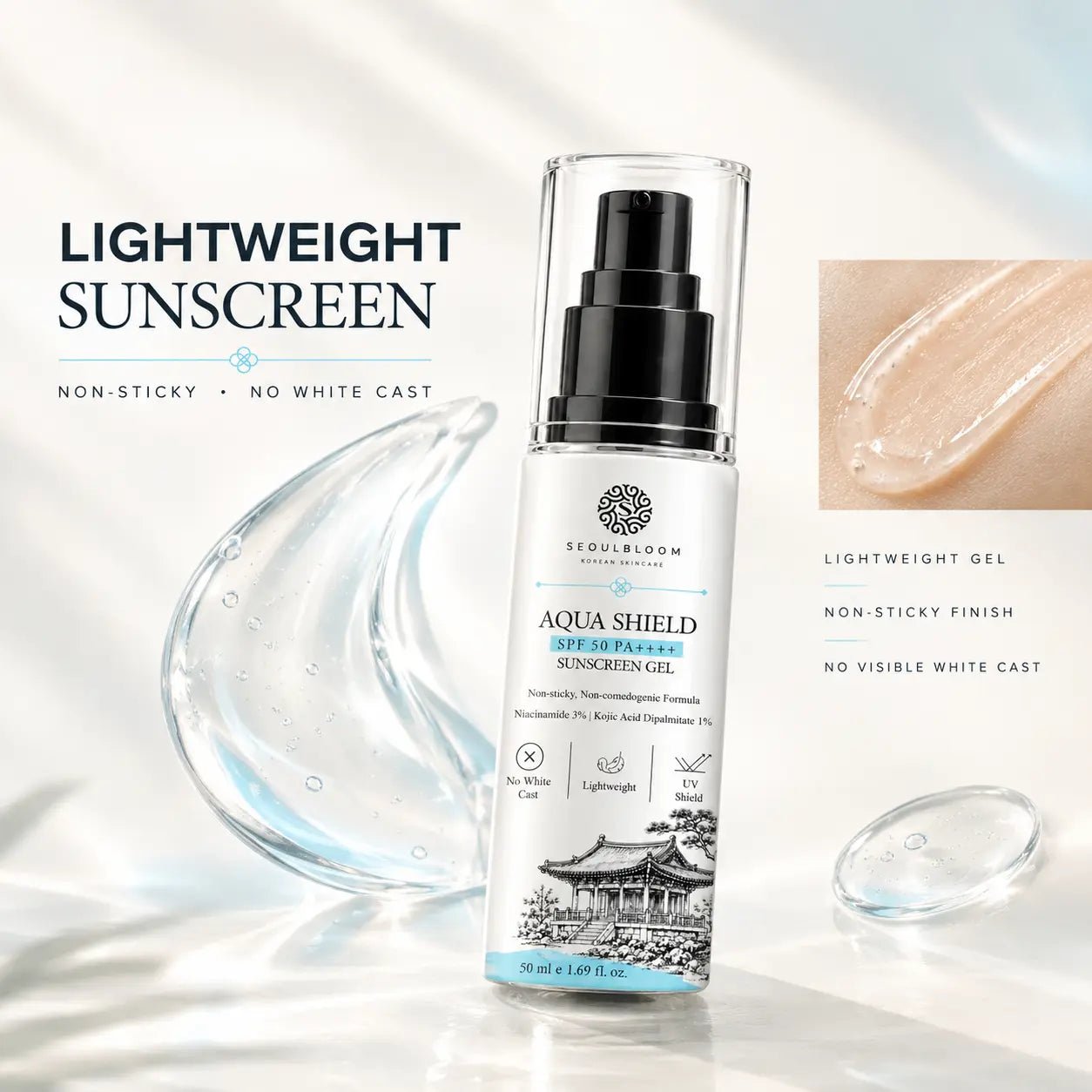
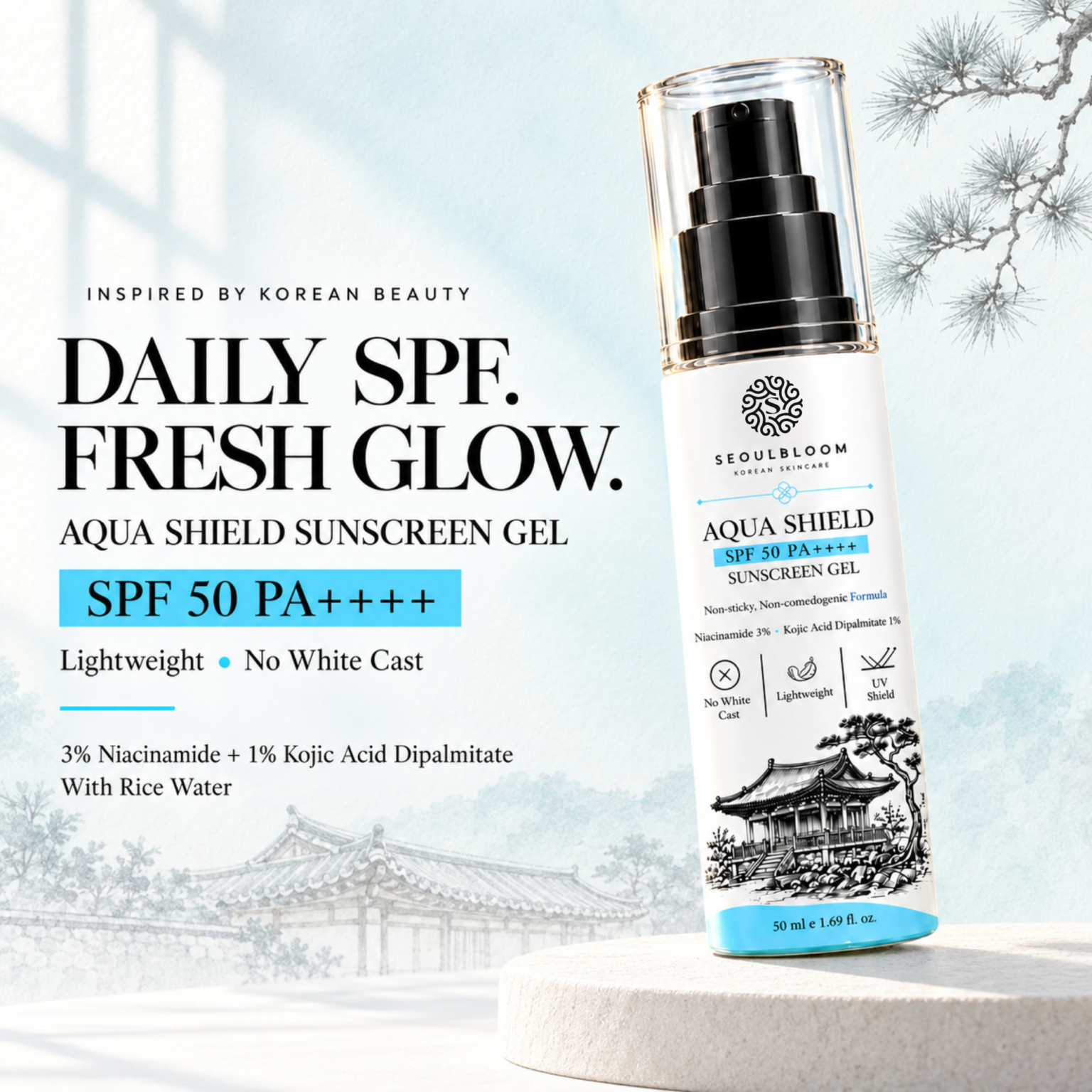
If you have oily, sensitive skin that handles niacinamide, SeoulBloom’s Aqua Shield SPF 50 PA++++ is one option to consider. It is a lightweight, non-comedogenic gel with no white cast. It also contains 3% niacinamide and 1% kojic acid dipalmitate. Because those actives can sting a small number of very reactive faces, patch test it first, as you would any new product.
Our pick
SeoulBloom Aqua Shield SPF 50 PA++++ Sunscreen Gel
- SPF 50 PA++++ broad-spectrum UVA/UVB protection
- Lightweight, non-sticky gel — no white cast
- Non-comedogenic; suits oily & combination skin
- 3% niacinamide + 1% kojic acid dipalmitate for even-looking tone
- 60 ml · ₹799
₹999
On the other hand, if you have rosacea or eczema, a fragrance-free mineral lotion remains the safer first step.
Common mistakes that trigger flare-ups

Most flare-ups come from routine habits rather than the sunscreen alone. Watch for these:
- Trusting “natural” claims: plant oils and extracts can irritate as much as synthetic ingredients.
- Layering too many actives: retinoids, acids and vitamin C under sunscreen raise the chance of stinging.
- Rubbing hard: friction worsens redness, especially with thicker mineral creams.
- Switching often: new products every week make it hard to find the real trigger.
- Skipping it indoors: UVA passes through windows, so rosacea and melasma can still worsen.
- Using sprays on the face: aerosols can sting the eyes and nose, and coverage is uneven.
Finally, keep shade, a wide-brimmed hat and sunglasses in the plan. Sunscreen works best as one part of sun protection, not the whole of it.
When should you see a dermatologist?
See a dermatologist if every sunscreen seems to burn, or if a rash spreads, blisters or lasts more than a few days. These signs may point to a true allergy, rosacea, eczema or a photosensitive condition that needs diagnosis.
A dermatologist can also arrange patch testing and photopatch testing. These tests identify the exact ingredient behind your reaction. As a result, you can shop with a clear “avoid” list rather than guessing.
Also, check with a doctor if you take medicines that increase sun sensitivity, such as some antibiotics or acne tablets. For babies and young children, ask your paediatrician before choosing any sunscreen.
Frequently asked questions
What is the best type of sunscreen for sensitive skin?
For most people, a fragrance-free mineral sunscreen with zinc oxide or titanium dioxide is the gentlest start. Some sensitive skin also does well with modern chemical filters, so the best one is the formula you can wear daily without a reaction.
Can I use sunscreen for sensitive skin every day?
Yes. Daily use is the goal, because UVA reaches your skin through windows and clouds. A gentle, broad-spectrum formula is safe for everyday wear once you have patch tested it.
Why does my sunscreen burn my face?
Burning usually comes from fragrance, alcohol, certain chemical filters or a damaged skin barrier. Pause any exfoliants, switch to a fragrance-free mineral formula and see a dermatologist if it continues.
Is SPF 50 too strong for sensitive skin?
No. A higher SPF does not irritate more by itself. The filters and base ingredients decide comfort, so a gentle SPF 50 PA++++ suits Indian summers well.
Does mineral sunscreen leave a white cast on Indian skin?
It can, particularly older or thick formulas. Tinted mineral sunscreens and newer micronised versions reduce the cast and also help with visible light on deeper skin tones.
Is niacinamide safe in sunscreen for sensitive skin?
Many people find niacinamide soothing, and it may support the skin barrier. A small number feel a flush or tingle, so patch test any sunscreen with niacinamide first.
Can I use sunscreen for sensitive skin on my child?
Children’s skin needs extra care. Ask your paediatrician before choosing a sunscreen, and keep babies under six months out of direct sun, as the AAD and NHS advise.
How we researched this guide: We reviewed the top-ranking Indian and global guides for this topic, including retailer blogs and dermatologist round-ups, and noted gaps such as missing sources, unexplained PA grades and weak patch-test advice. We then checked every claim against the AAD, NHS, Cleveland Clinic, the National Rosacea Society and peer-reviewed reviews on PubMed. Read our editorial policy.
Sources & further reading
- AAD: How do I know if I’m using the right sunscreen?
- AAD: How to apply sunscreen
- Ekstein & Hylwa (2023). Sunscreens: A Review of UV Filters and Their Allergic Potential. Dermatitis (PubMed)
- Contact and photocontact allergy to octocrylene: a review (PubMed)
- Cleveland Clinic: Mineral sunscreen explained
- National Rosacea Society: Sunscreen for rosacea
- NHS: Sunscreen and sun safety
- WHO: Ultraviolet radiation fact sheet

Written & fact-checked by
SeoulBloom Editorial Team — the skincare research and product team behind SeoulBloom. We formulate and sell sunscreen for Indian skin, test textures in Indian heat and humidity, and check every claim against dermatology bodies (AAD, WHO) and peer-reviewed research. Updated 22 November 2026. How we write & review.
Disclosure: SunscreenGel.com is run by the team behind SeoulBloom, and we link to SeoulBloom products where they fit. This article is for general education, not medical advice — see a dermatologist for skin conditions. Read our disclaimer. Last reviewed November 2026.