Quick answer: The best sunscreen for kids aged 6 months and older is broad-spectrum, SPF 30 or higher, and ideally a mineral formula with zinc oxide or titanium dioxide. Apply a generous layer before going out and reapply every 2 hours. Keep babies under 6 months in the shade and ask a paediatrician.
Key takeaways
- Babies under 6 months need shade and clothing, not routine sunscreen; ask your paediatrician.
- From 6 months, use broad-spectrum SPF 30+; PA+++ or PA++++ suits Indian summers.
- Mineral filters (zinc oxide, titanium dioxide) are gentler on young, sensitive skin.
- Reapply every 2 hours and after swimming or sweating; no sunscreen is waterproof.
- Shade, hats, sleeves and avoiding midday sun matter as much as sunscreen.
Choosing sunscreen for kids can feel confusing, with SPF numbers, PA plus signs and ingredient scares on every pack. Yet the core rules are simple, and they come from dermatology and child-health bodies, not marketing.
This guide covers when to start, which SPF and PA to choose, mineral versus chemical filters, and how much to apply. It also adds Indian context, from Delhi summers to Mumbai monsoons. Please treat it as general information, and check with your paediatrician for babies or any skin condition.
In this article
- Why do kids need sunscreen in India?
- At what age can kids start using sunscreen?
- What about babies under 6 months?
- Which SPF and PA should a sunscreen for kids have?
- Mineral or chemical: which sunscreen is better for kids?
- Lotion, gel, stick or spray: which format works best?
- How much sunscreen do kids need?
- How to apply sunscreen on kids, step by step
- How often should kids reapply sunscreen at school and play?
- Sun safety beyond sunscreen: shade, clothes and timing
- How should you adjust for Indian seasons and cities?
- What about teens, and sunscreen for parents?
- What mistakes do parents make with sunscreen for kids?
- FAQ
Why do kids need sunscreen in India?
Kids need sunscreen because their skin burns easily and India’s UV levels run high for most of the year. The WHO says children are more sensitive to UV radiation than adults. It also warns that sunburns, especially in childhood, raise the risk of melanoma later in life.
Indian children also spend a lot of time outdoors. Think of school assemblies, PT periods, cricket in the colony and the walk to the bus stop. Most of this happens close to midday, when UV peaks. So a daily habit matters more than a once-a-year beach routine.
Darker Indian skin tones do burn less often. However, they still tan, and they still take UV damage. Moreover, the WHO notes that children rarely understand UV risk on their own. That is why parents set the habit early.
Before you plan outdoor time, check the local UV level. Our UV index India guide explains how to read it. As a rule of thumb from the WHO, protection becomes important once the UV index reaches 3.
At what age can kids start using sunscreen?
Most kids can start sunscreen at 6 months of age. Before that, health bodies advise shade and clothing first. The NHS says babies under 6 months should stay out of direct sunlight. In addition, it does not recommend sunscreen for them.
From 6 months, the picture changes. Sunscreen then becomes one part of a wider plan. Still, shade, hats and clothes stay the first line of defence at every age.
| Age | Main protection | Sunscreen guidance |
|---|---|---|
| 0–6 months | Shade, long sleeves, wide-brim hat | Avoid as a routine; ask your paediatrician first |
| 6 months–2 years | Shade plus clothing | Broad-spectrum SPF 30+, mineral formula preferred |
| 2–12 years | Hat, UV-blocking sunglasses, timing | SPF 30+ broad spectrum, water-resistant for sport |
| Teens | Daily habit they own | SPF 30–50, PA+++ or higher; textures they will actually use |
This table summarises guidance from the NHS, the AAD and the FDA. Your paediatrician can adjust it for your child.
What about babies under 6 months?

Babies under 6 months should stay in the shade rather than wear sunscreen. The US FDA advises keeping them out of direct sun. It also says to check with a paediatrician before using any sunscreen at this age.
Instead, dress the baby in light, long-sleeved cotton and a brimmed hat. Use a stroller hood or umbrella for shade. Also, offer feeds often, because babies overheat quickly. If shade is truly unavailable, the American Academy of Dermatology suggests a minimal amount of zinc oxide or titanium dioxide sunscreen. Even so, please talk to your doctor first.
Watch for fussiness, redness or excessive crying. If your baby burns, move them indoors, use cool compresses and call your paediatrician right away.
Which SPF and PA should a sunscreen for kids have?

A sunscreen for kids should have SPF 30 or higher and broad-spectrum protection. Broad spectrum means it covers both UVA and UVB rays. The AAD, NHS and KidsHealth all point to SPF 30 as the minimum.
SPF mainly measures protection from UVB, the rays that cause sunburn. Meanwhile, UVA drives tanning and deeper damage. On Indian and Korean labels, the PA rating shows UVA strength. It comes from Japan and rests on a test called PPD (persistent pigment darkening).
| Label | What it tells you | Good choice for kids? |
|---|---|---|
| SPF 30 | Solid UVB protection when applied properly | Yes, the recommended minimum |
| SPF 50 | A little more UVB protection | Yes, useful for long outdoor days |
| PA+++ | High UVA protection (PPD above 8) | Yes |
| PA++++ | Highest UVA rating (PPD 16 or more) | Yes, ideal for Indian summers |
| “Broad spectrum” | Covers UVA and UVB | Look for it on every pack |
In practice, SPF 30 applied well beats SPF 50 applied thinly. Higher numbers also tempt families to apply less and reapply later.
A quick label checklist for parents
Before you buy, turn the pack over and check five things. First, look for the words “broad spectrum” or a PA rating. Second, confirm SPF 30 or higher. Third, scan the active ingredients for zinc oxide or titanium dioxide if your child is under five. Fourth, prefer “fragrance-free” over “unscented”, because unscented products can still contain masking fragrance. Finally, check the expiry date and the water-resistance claim, if any.
Also note how the product feels. A sunscreen your child refuses is useless. So buy a small size first, and test the texture at home before a long school day.
Mineral or chemical: which sunscreen is better for kids?
Mineral sunscreen is usually the first choice for kids, especially toddlers. It uses zinc oxide and/or titanium dioxide. The AAD says these filters are less likely to irritate sensitive young skin.
Chemical sunscreens absorb UV instead. They often feel lighter and leave no white cast. So older kids and teens may prefer them. Children’s Hospital Los Angeles puts it simply: any sunscreen is better than no sunscreen.
If your child has eczema or reactive skin, stick with fragrance-free mineral formulas. Our guide to sunscreen for sensitive skin covers what to check on the label.
Ingredients worth avoiding or questioning
KidsHealth suggests skipping PABA, since it can trigger skin allergies. It also flags oxybenzone over possible hormonal effects. Added fragrance can sting, too. However, ingredient fear should not stop you using sunscreen at all. If you are unsure, show the label to your paediatrician or dermatologist.
Lotion, gel, stick or spray: which format works best?
Lotions and sticks work best for most children. They let you see exactly where the product goes. By contrast, sprays make coverage hard to judge.
| Format | Best for | Watch out for |
|---|---|---|
| Lotion / cream | Full body, dry skin, winter | Can feel heavy in humid weather |
| Gel | Older kids and teens, oily skin, monsoon | Check it is broad spectrum and fragrance-free |
| Stick | Face, ears, nose; school bags | Needs several swipes for enough coverage |
| Spray | Quick top-ups on limbs | Inhalation, uneven cover; never spray on the face |
Cleveland Clinic calls sprays the least recommended type, because much of the product blows away. If you do use one, spray into your hands first. Then rub it onto your child’s face.
How much sunscreen do kids need?
Kids need enough sunscreen to form a thick, even layer on all exposed skin. Most families use far too little. In fact, Children’s Hospital Los Angeles names under-applying as one of the two most common mistakes.
Lab tests use 2 mg of sunscreen per square centimetre of skin. For an adult’s whole body, KidsHealth suggests about 1 ounce, roughly a shot glass. A child needs less, because they have less skin. Still, the layer should be just as thick.
For the face, our guide on how much sunscreen to apply on face shows simple measuring tricks. Scale it down for a small face.
How to apply sunscreen on kids, step by step
Apply sunscreen on kids 15–30 minutes before they go out, in a calm moment. Follow these steps:
- Patch test a new product on the inner wrist the day before.
- Start with clean, dry skin after the morning bath.
- Dot sunscreen on the forehead, cheeks, nose and chin, then spread it.
- Cover ears, the back of the neck, shoulders and the tops of feet.
- Do arms and legs next, in long strokes.
- Add an SPF lip balm suitable for kids.
- Finally, add a hat and, for older kids, UV-blocking sunglasses.
Make it a game for toddlers. For example, let them dot it on your nose first. Older children can apply it themselves while you check missed spots.
How often should kids reapply sunscreen at school and play?
Kids should reapply sunscreen every 2 hours outdoors, and straight after swimming or heavy sweating. The NHS and AAD both give this advice. Water-resistant labels help, yet no sunscreen is waterproof.
At school, the morning layer often wears off by lunch. So pack a small stick in the school bag for the PT period or sports day. Also, teach your child to reapply on the face and ears before outdoor play.
During swimming lessons, reapply after every session. Then towel off gently and reapply before the next outdoor stretch.
A school-day sun routine that works
Many Indian schools hold assemblies and sports outdoors. So build a short routine around the school timetable. Apply a full layer at home after the bath. Then pack a stick or small tube in a labelled pouch. Ask your child to top up the face, ears and neck before the PT period or lunch break.
It also helps to speak with the class teacher. For example, some schools allow caps on sports days or move events to cooler hours. If your child has a skin condition, a short note from your doctor can make this easier. Meanwhile, keep a spare hat and water bottle in the bag every day.
Sun safety beyond sunscreen: shade, clothes and timing
Sunscreen is only one layer. The WHO says shade and clothing protect better than sunscreen alone. So combine all of them.
- Timing: UV is strongest two hours either side of solar noon. In much of India, that means late morning to mid-afternoon.
- Clothing: Choose tightly woven cotton with sleeves. If you can see light through it, it blocks less UV.
- Hats: A wide brim shades the face, ears and neck. A cap leaves the ears exposed.
- Sunglasses: Pick wraparound styles that block 100% of UVA and UVB.
- Water: Offer drinks often, because children overheat faster than adults.
Parents often worry about vitamin D. Our article on sunscreen and vitamin D explains the evidence. If you are concerned, ask your paediatrician about testing.
How should you adjust for Indian seasons and cities?
Adjust the texture and reapplication, not the habit. UV stays meaningful in every Indian season.
Summer and pre-monsoon
From March to June, cities like Delhi, Jaipur, Ahmedabad and Nagpur see intense sun and heat. Choose SPF 50 PA++++ for long outdoor days. Also, shift outdoor play to early morning or evening.
Monsoon and winter
In Mumbai or Kochi, monsoon clouds do not block all UV. Light gels suit sticky, humid days. Meanwhile, in a North Indian winter, a creamier lotion helps dry skin. Hill trips to Shimla or Ooty need extra care, since snow and altitude add exposure.
| Season / place | Texture | Extra tip |
|---|---|---|
| Summer, plains | Light lotion or gel | Reapply every 2 hours; plan play after 4 pm |
| Monsoon, coastal | Gel or fluid | Water-resistant for rain and puddles |
| Winter, North India | Cream or lotion | Pair with a gentle moisturiser |
| Beach or hills holiday | Water-resistant SPF 50 | Hat and sunglasses are non-negotiable |
What about teens, and sunscreen for parents?
Teens often skip sunscreen because of white cast, oiliness or acne worries. So let them choose a texture they like. A lightweight gel often works well for oily, acne-prone teenage skin.
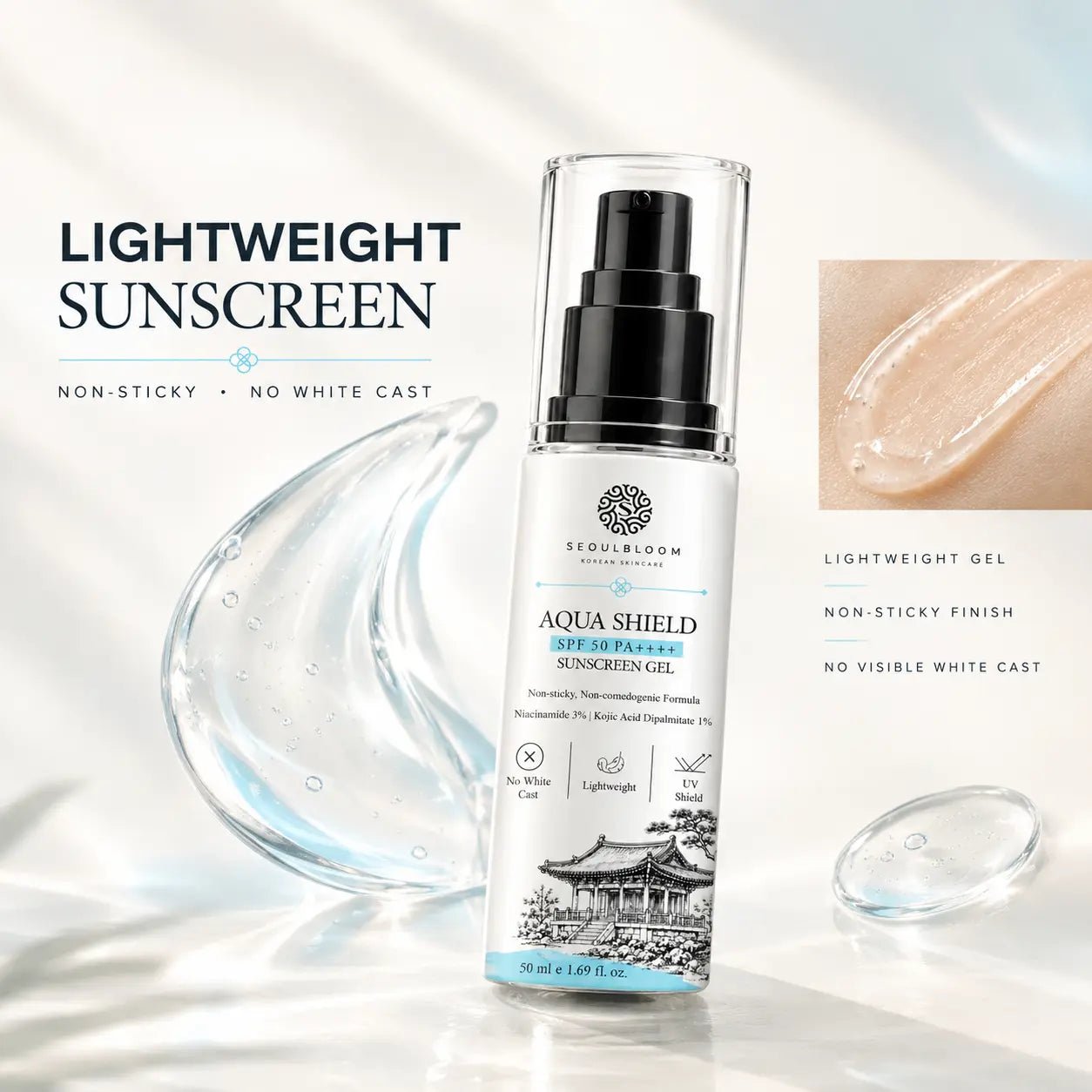
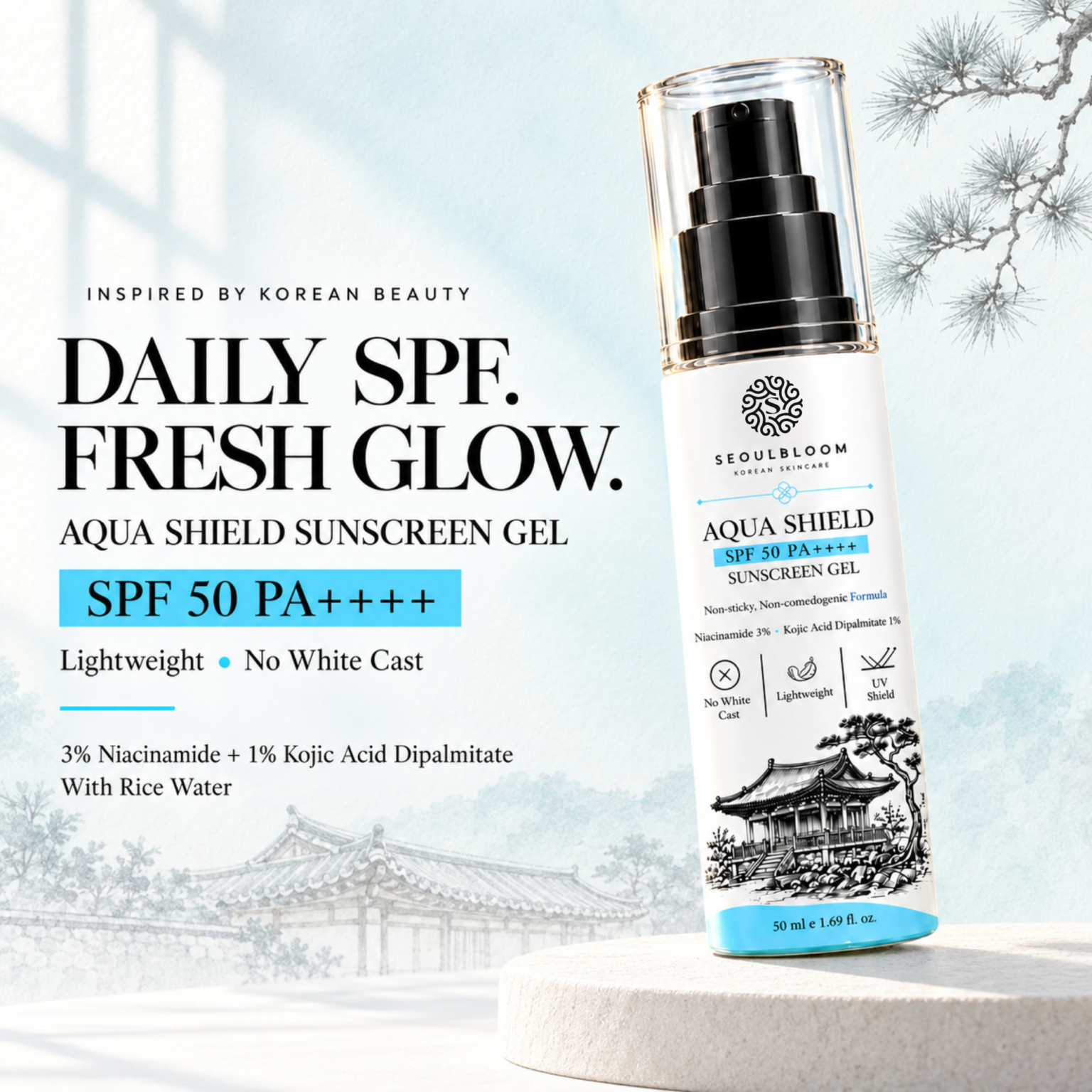
Parents also model the habit. If kids see you apply SPF every morning, they copy it. For your own skin, or for a teen who prefers an adult gel, a broad-spectrum SPF 50 PA++++ formula fits Indian summers. Note that the product below is an everyday gel for teens and adults, not a baby or toddler sunscreen.
Our pick
SeoulBloom Aqua Shield SPF 50 PA++++ Sunscreen Gel
- SPF 50 PA++++ broad-spectrum UVA/UVB protection
- Lightweight, non-sticky gel — no white cast
- Non-comedogenic; suits oily & combination skin
- 3% niacinamide + 1% kojic acid dipalmitate for even-looking tone
- 60 ml · ₹799
₹999
For younger children, pick a formula made for kids and check it with your paediatrician. You can browse the wider SeoulBloom sunscreen range for teen and adult options only.
What mistakes do parents make with sunscreen for kids?
The biggest mistakes with sunscreen for kids are using too little and forgetting to reapply. Here are others to avoid:
- Skipping it on cloudy or winter days.
- Missing ears, neck, feet and the hairline parting.
- Using last year’s tube after its expiry date.
- Relying on sunscreen alone at midday.
- Choosing a scented adult product for sensitive toddler skin.
Overall, the best routine is simple and repeatable. Explore more situations in our Sunscreen for Every Situation hub, or browse every guide on the sunscreen topics page.
Frequently asked questions
Is sunscreen safe for kids?
Yes. For children 6 months and older, dermatology bodies such as the AAD recommend broad-spectrum SPF 30 or higher. Mineral formulas with zinc oxide or titanium dioxide are usually gentlest. Patch test new products and ask your paediatrician if your child has eczema.
Can I use adult sunscreen on my child?
For older children and teens, many fragrance-free adult sunscreens work fine. For toddlers, a kids’ mineral formula is the safer first choice. Avoid scented products on sensitive skin and check the label with your doctor if unsure.
Is SPF 50 better than SPF 30 for kids?
SPF 50 gives slightly more UVB protection than SPF 30. However, the amount you apply and how often you reapply matter more. SPF 30 is the minimum most health bodies recommend; SPF 50 helps on long outdoor days.
Which sunscreen is best for kids with eczema?
Fragrance-free mineral sunscreens with zinc oxide or titanium dioxide are usually the gentlest choice. Patch test on the inner wrist first. Because eczema needs individual care, ask your paediatrician or a dermatologist before starting any new product.
Do kids need sunscreen on cloudy days or in winter?
Yes. Clouds do not block all UV, and UV in India stays meaningful year-round. Apply sunscreen on exposed skin whenever children spend time outdoors, especially from late morning to mid-afternoon.
How often should kids reapply sunscreen?
Reapply every 2 hours when outdoors, and immediately after swimming, sweating or towelling off. Water-resistant sunscreens still wear off, so set a reminder for school sports days and pool sessions.
Does sunscreen stop kids getting vitamin D?
Evidence suggests normal sunscreen use rarely causes vitamin D deficiency. If you are concerned, ask your paediatrician about diet, supplements or a blood test rather than skipping sun protection.
What should I do if my child gets sunburnt?
Move them out of the sun, cool the skin with cool compresses and offer fluids. For babies, or for blistering, fever or severe pain, contact your paediatrician promptly.
How we researched this guide: We reviewed the top-ranking Indian and global pages for this keyword, including brand blogs and listicles, and noted that most cite no medical sources. We then checked every recommendation against guidance from the AAD, NHS, US FDA, WHO, Skin Cancer Foundation, Cleveland Clinic and KidsHealth. Read our editorial policy.
Sources & further reading
- AAD: Infant sun protection
- NHS: Safety in the sun (babies and children)
- FDA: Should you put sunscreen on infants?
- WHO: Protecting against skin cancer
- WHO: The ultraviolet (UV) index
- Skin Cancer Foundation: Kids and sunscreen
- KidsHealth: How to choose and use sunscreen
- Cleveland Clinic: Sunscreen for babies
- CHLA: What’s the best sunscreen for kids?
- Wikipedia: Sunscreen

Written & fact-checked by
SeoulBloom Editorial Team — the skincare research and product team behind SeoulBloom. We formulate and sell sunscreen for Indian skin, test textures in Indian heat and humidity, and check every claim against dermatology bodies (AAD, WHO) and peer-reviewed research. Updated 22 November 2026. How we write & review.
Disclosure: SunscreenGel.com is run by the team behind SeoulBloom, and we link to SeoulBloom products where they fit. This article is for general education, not medical advice — see a dermatologist for skin conditions. Read our disclaimer. Last reviewed November 2026.